
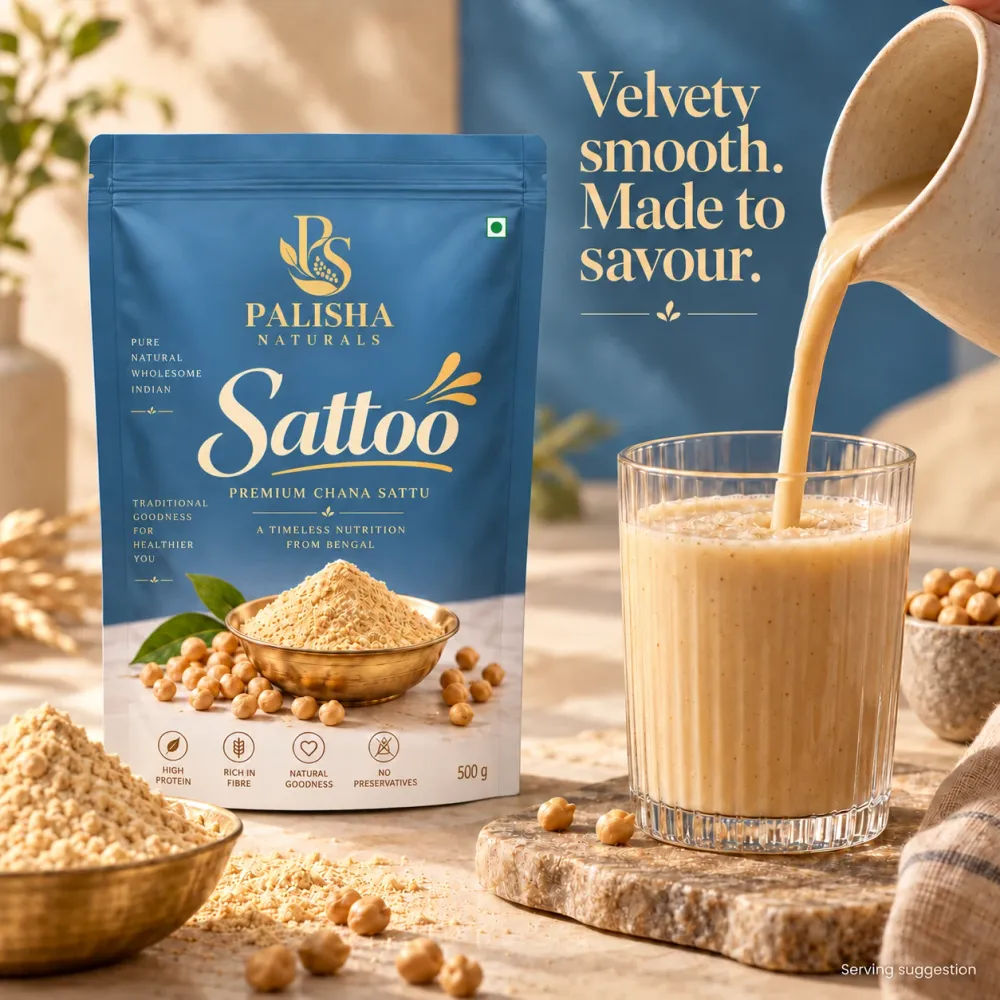
What Is Sattu? A Complete Guide to Roasted Gram Flour
Sattu is a flour made by roasting Bengal gram and grinding it fine. Here is what it is, how it differs from besan, and how Indian kitchens have used it for generations.
Read the storySattu guides, nutrition facts straight from our label, regional recipes and pantry wisdom from Bengaluru.
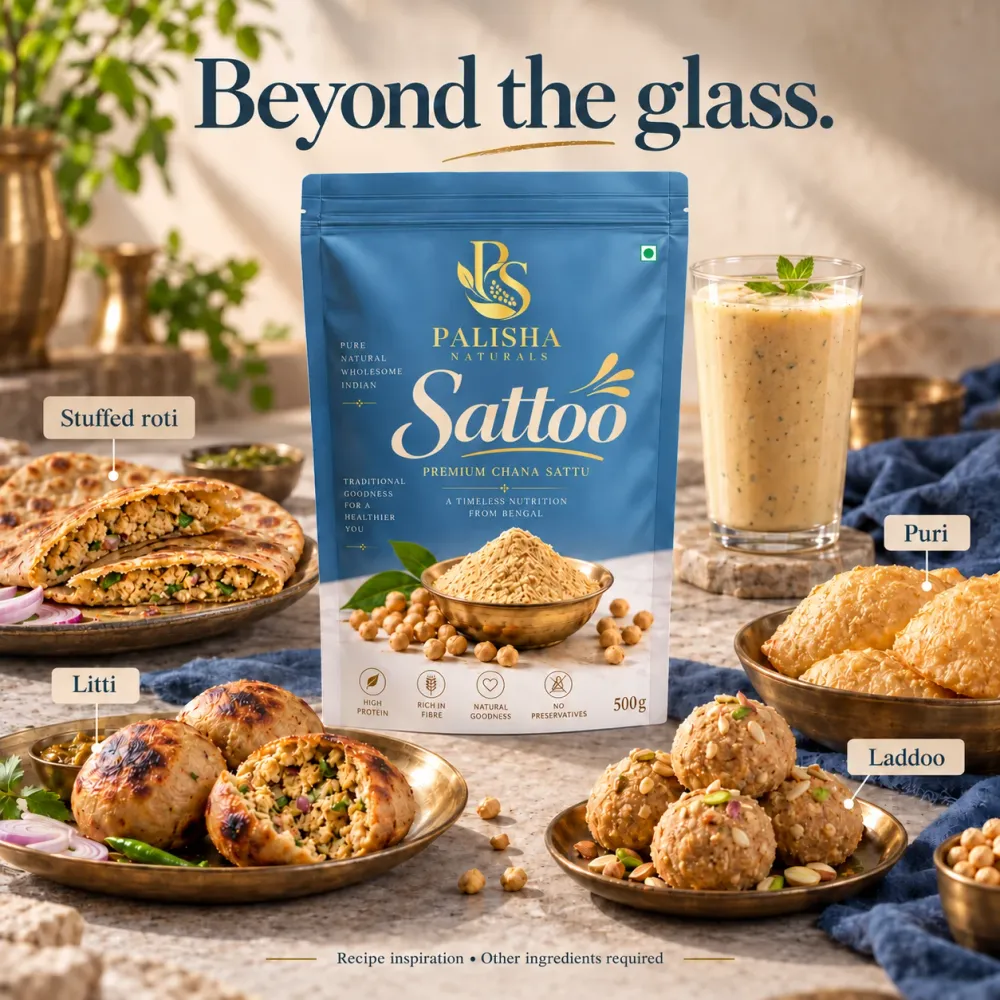
Sattu is a flour made by roasting Bengal gram and grinding it fine. Here is what it is, how it differs from besan, and how Indian kitchens have used it for generations.
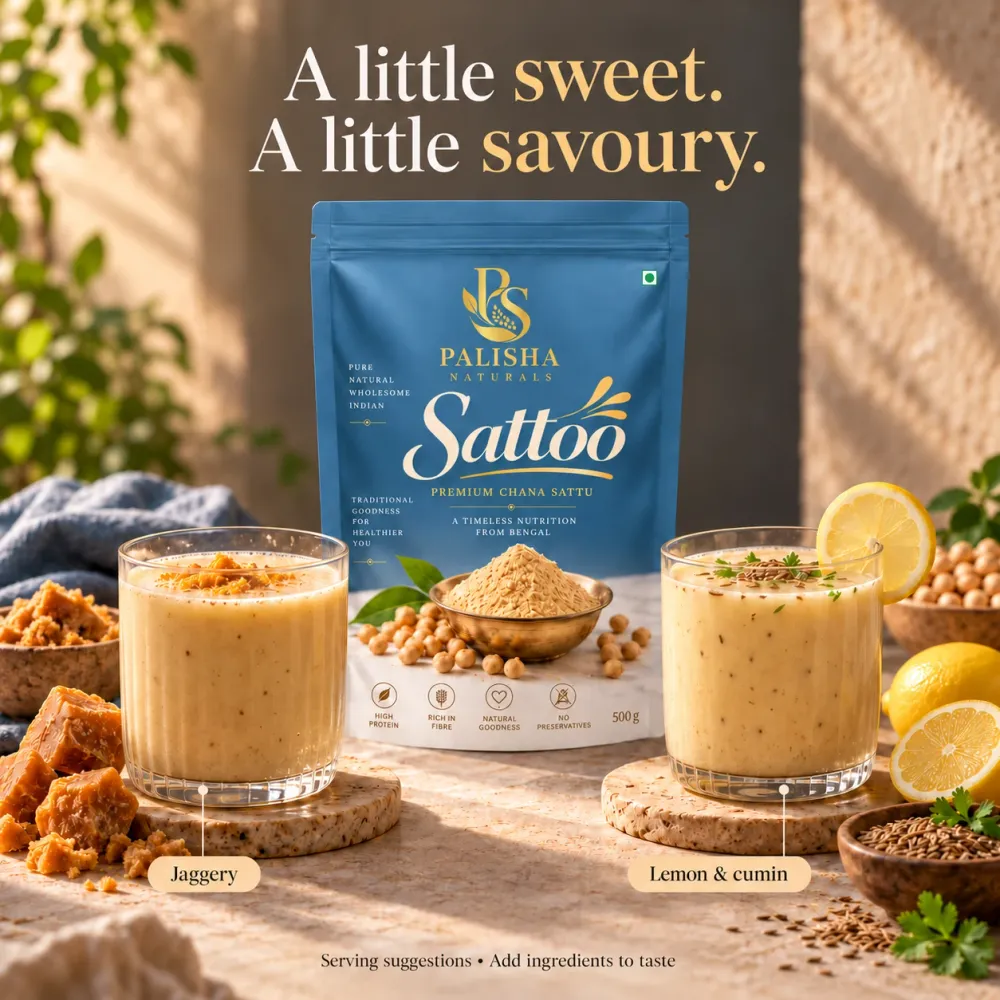
Read the storyTwo to three tablespoons of sattu, a glass of water, a pinch of salt or jaggery. Here is how to turn that into a smooth, well-seasoned sattu sharbat every time.
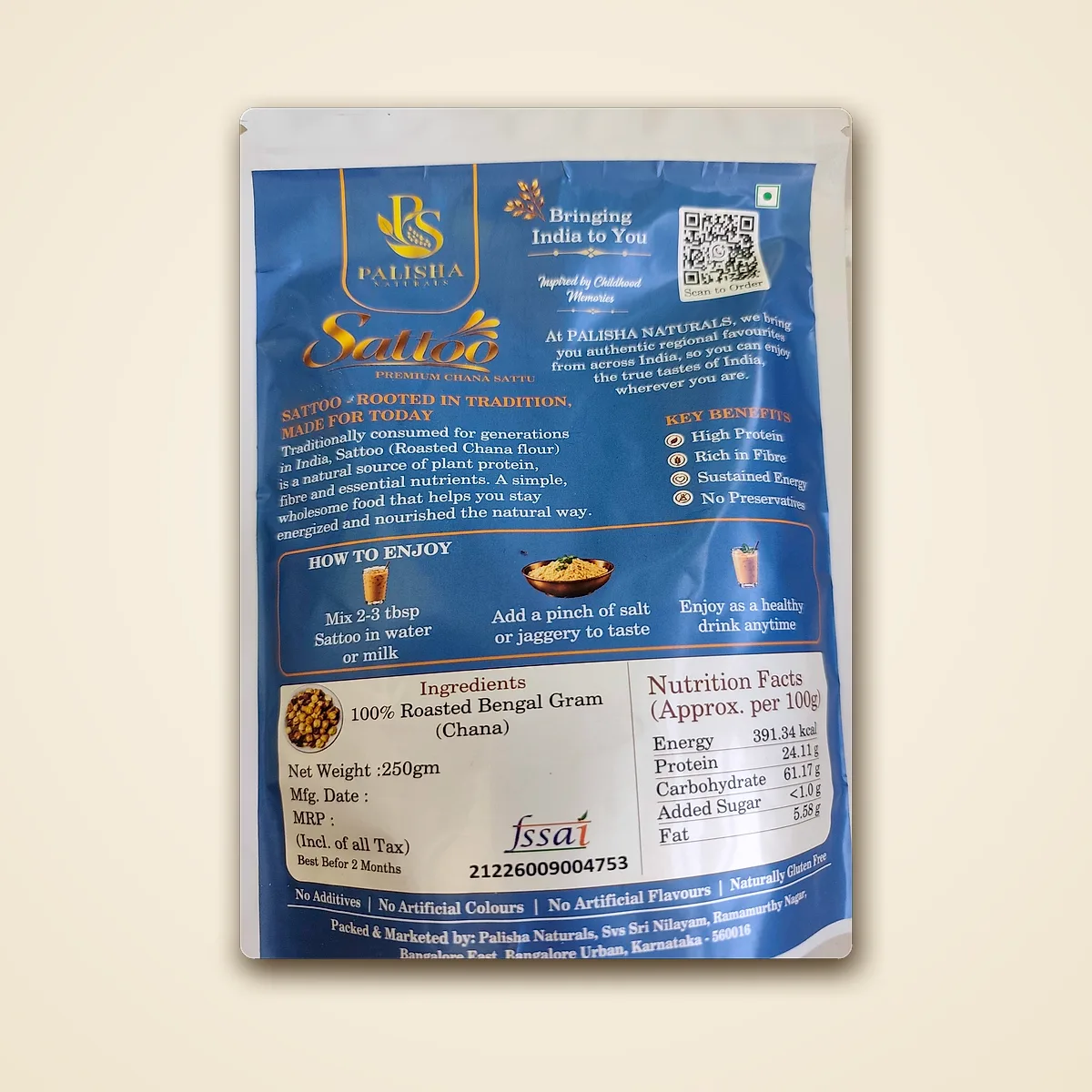
Our Chana Sattoo label shows about 24 g of protein per 100 g. Here is what each number on the label means and what a normal glass of sattu actually gives you.
Sattu is a whole food with protein and fibre; whey is a concentrated supplement. Here is a fair comparison so you can choose what fits your kitchen and your goals.
The same spiced sattu filling makes two of Bihar's best-loved dishes. Here is how to make it, and how to turn it into sattu paratha and litti chokha at home.
From Patna railway platforms to Bengaluru office canteens, a glass of salted sattu is how a large part of India gets through the summer. Here is why.
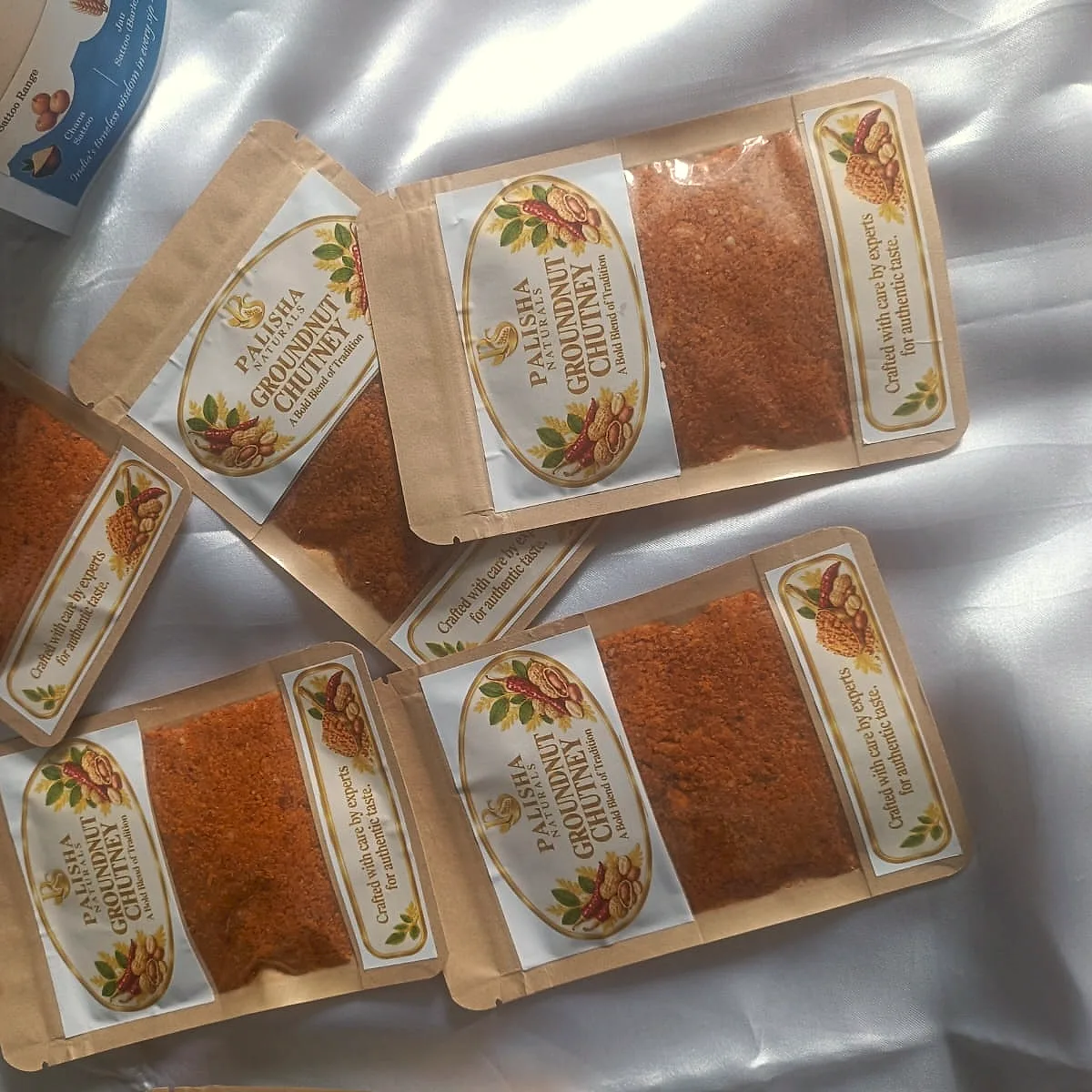
A spoon of dry groundnut chutney can rescue a plain roti, finish a bowl of rice and turn curd into a side dish. Here is how North Karnataka and Maharashtra use it.
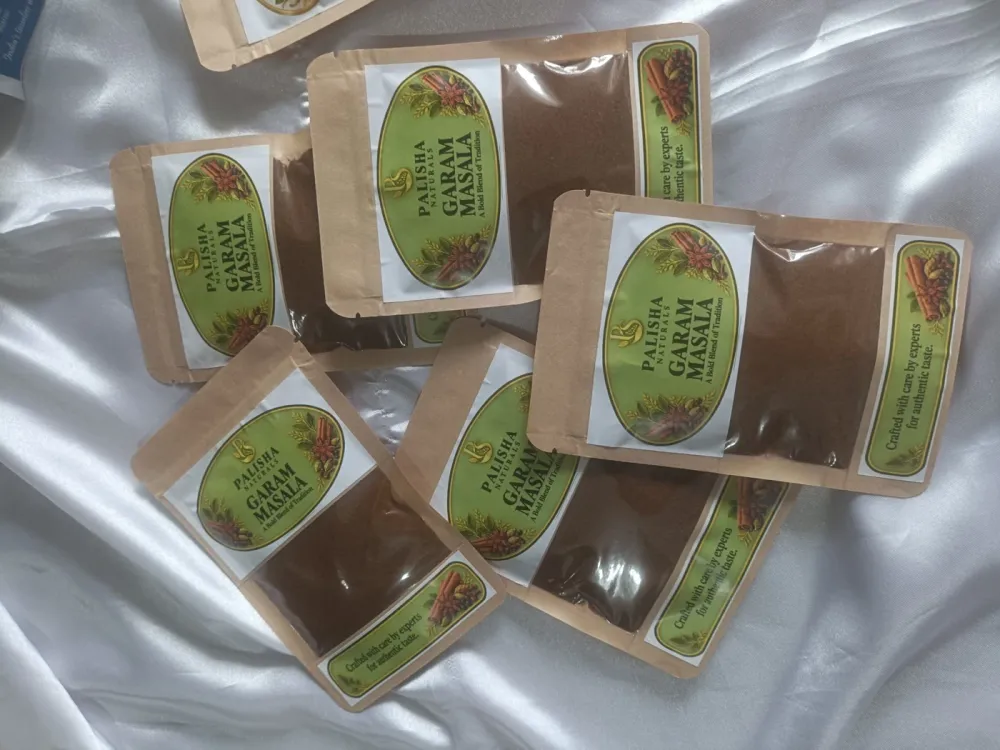
Garam masala is a finishing blend of warm whole spices. Here is what goes into it, why it is added towards the end of cooking, and how much each dish needs.
Not all sattu is equal. Before you order online, check five things on the label and in the pack: FSSAI number, ingredients, best-before, roast colour and pack size.