
When buying sattu online, check five things: a valid FSSAI licence number on the pack, a single ingredient (100% roasted Bengal gram for chana sattu), a clear packed-on or best-before date, an even golden roast colour and a pack size you can finish while it is fresh. In Bengaluru and most Indian cities, ordering online is now the easiest way to get good chana sattu, as long as you know what to look for.
Sattu used to be something people carried back from home in a steel dabba after Chhath or a summer visit. Now it ships to any pincode. That convenience comes with a new question: how do you judge a product you cannot see or smell before you buy? Here is a practical checklist.
Is it easy to find sattu in Bengaluru?
It is getting easier, but availability is still patchy. You may find it in some supermarkets and North Indian provision stores, but stock and freshness vary from shop to shop. Many Bengaluru households that grew up with sattu, or discovered it through colleagues from Bihar, Jharkhand or Bengal, now prefer to order online.
Palisha Naturals is packed and marketed from Ramamurthy Nagar in Bengaluru East and ships across India, so for us this question is personal.
What should you check on a sattu label?
1. FSSAI licence number
Every packaged food sold in India must display a 14-digit FSSAI licence or registration number. It tells you the business is registered with the Food Safety and Standards Authority of India and is accountable for what is inside. If a listing or pack shows no FSSAI number, do not buy it.
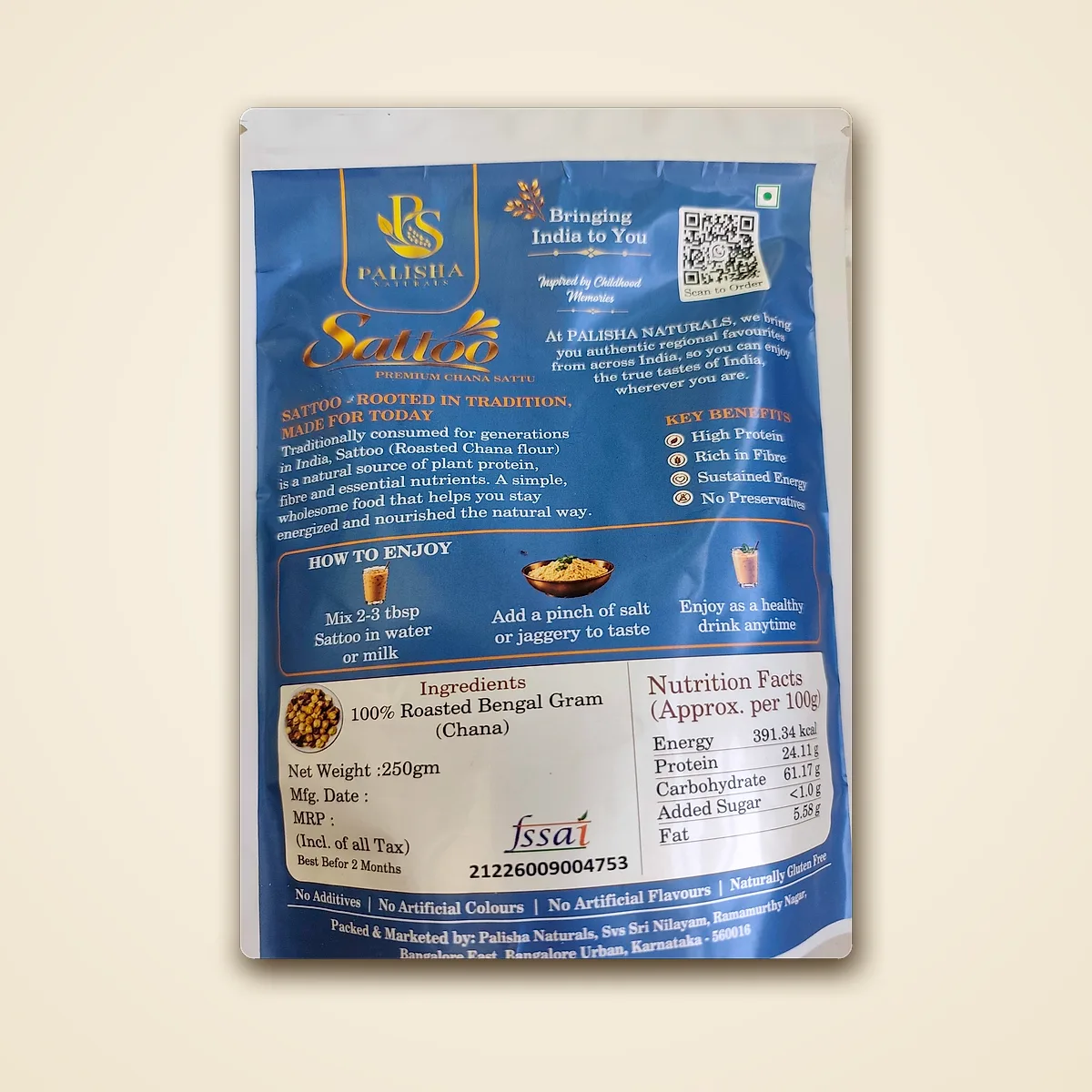
Our FSSAI licence number is 21226009004753, printed on every pack along with our address.
2. Ingredient list
For chana sattu, the ideal ingredient list is one word: roasted Bengal gram, or roasted chana. Our Chana Sattoo reads 100% roasted Bengal gram.
Watch for:
- Added wheat or barley in a product sold as chana sattu. Mixed sattu is a genuine traditional product, but it should be labelled as such, and it is not gluten free.
- Fillers or starches you would not expect.
- Added salt, sugar, flavour or preservatives. Plain sattu needs none of these; you season it at home.
3. Nutrition information
A proper label shows energy, protein, carbohydrate, sugar and fat per 100 g. For chana sattu, protein in the low-to-mid twenties per 100 g is typical. Our label shows 24.11 g. If the numbers look wildly different, or are missing, ask why. We explain each figure in Sattu nutrition explained.
4. Packed-on date and best-before
Roasted flour is at its best fresh. A pack without preservatives should carry an honest, fairly short best-before period. Ours is two months from packing. Be cautious of plain sattu with a very long shelf life and no explanation of how that is achieved.
When you order online, check the packed-on date as soon as the parcel arrives.
5. Name and address of the packer
The label should give the full name and address of the manufacturer or packer, and a customer contact. That is a legal requirement and a sign that someone stands behind the product.
What should good sattu look, smell and feel like?
Once the pack is in your hands, use your senses.
- Colour: an even, light golden to pale tan. Very white sattu may be under-roasted or mixed with raw flour; dark brown or burnt specks suggest uneven roasting.
- Smell: warm, nutty and toasty, like roasted chana. Any musty, damp, sour or rancid note means it is past its best.
- Texture: fine and soft, flowing freely from the spoon. Hard lumps that will not crumble suggest moisture got in.
- Taste: a pinch on the tongue should taste nutty and clean, with no bitterness or grittiness. Some fine husk is normal in traditional sattu.
How much sattu should you buy at once?
Buy what you will use within the best-before period. As a rough guide:
- A daily glass with 2 to 3 tablespoons uses roughly 600 to 900 g a month.
- An occasional glass and the odd paratha might use 250 g a month.
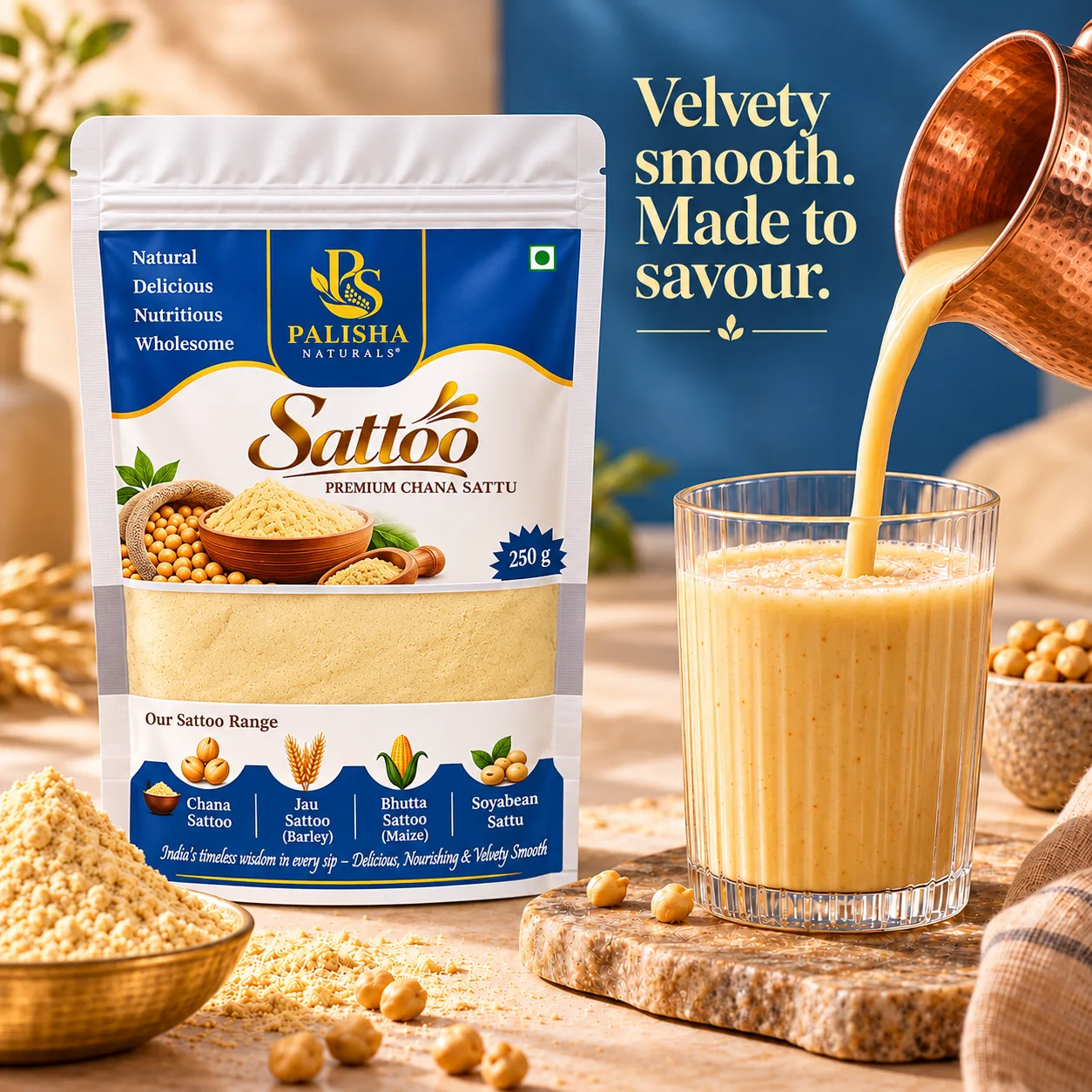
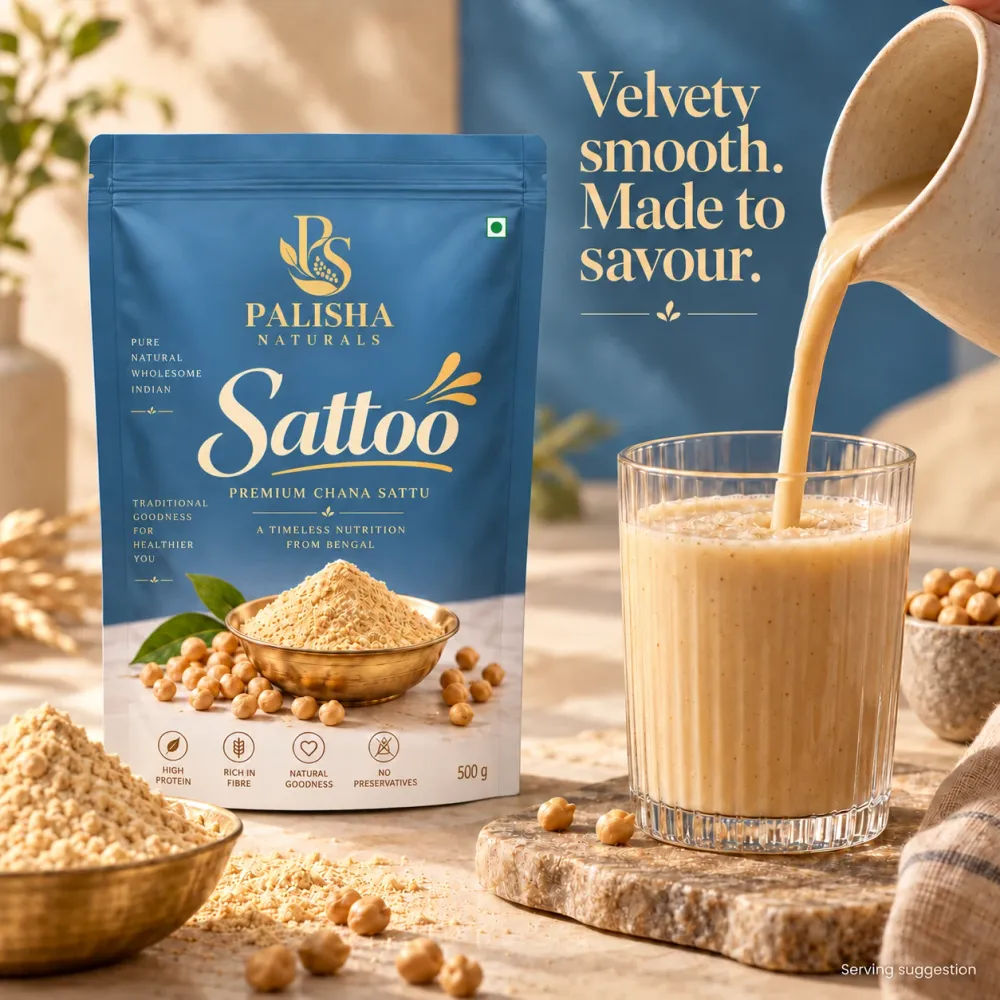
That is why we offer our Chana Sattoo in both 250 g and 500 g packs. Try the smaller size first; move to the larger pack once you know your household's pace.
How should sattu be packed for shipping?
Good online sellers pack sattu in sealed, food-grade pouches that keep out moisture and air, with the label intact and readable. When your parcel arrives:
- Check that the pouch is sealed and undamaged.
- Check the packed-on and best-before dates.
- Transfer the sattu to a clean, dry, airtight jar once opened.
If the pack arrives damaged, raise it with the seller promptly. Our shipping and support details explain how to reach us.
Can you order other traditional staples alongside sattu?
Yes, and it is a sensible way to share shipping. Our range includes:
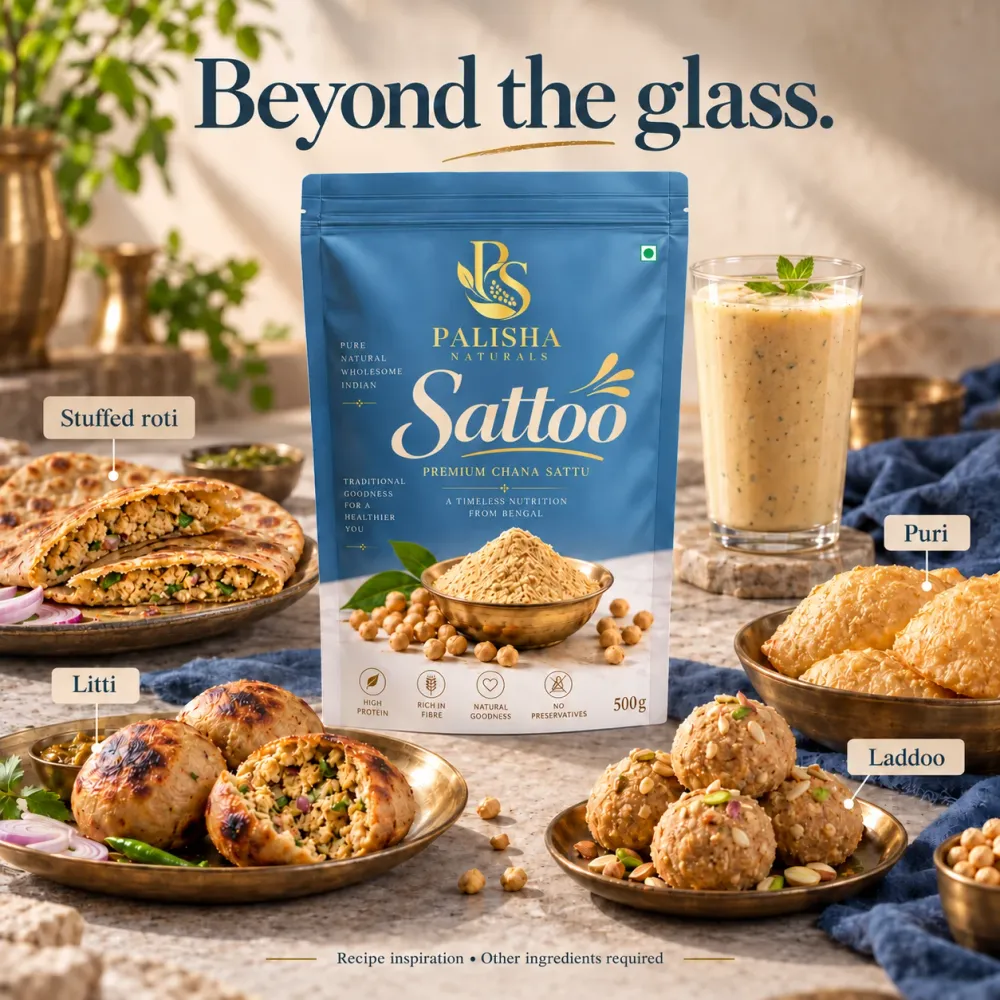
- Premium Chana Sattoo, 250 g and 500 g
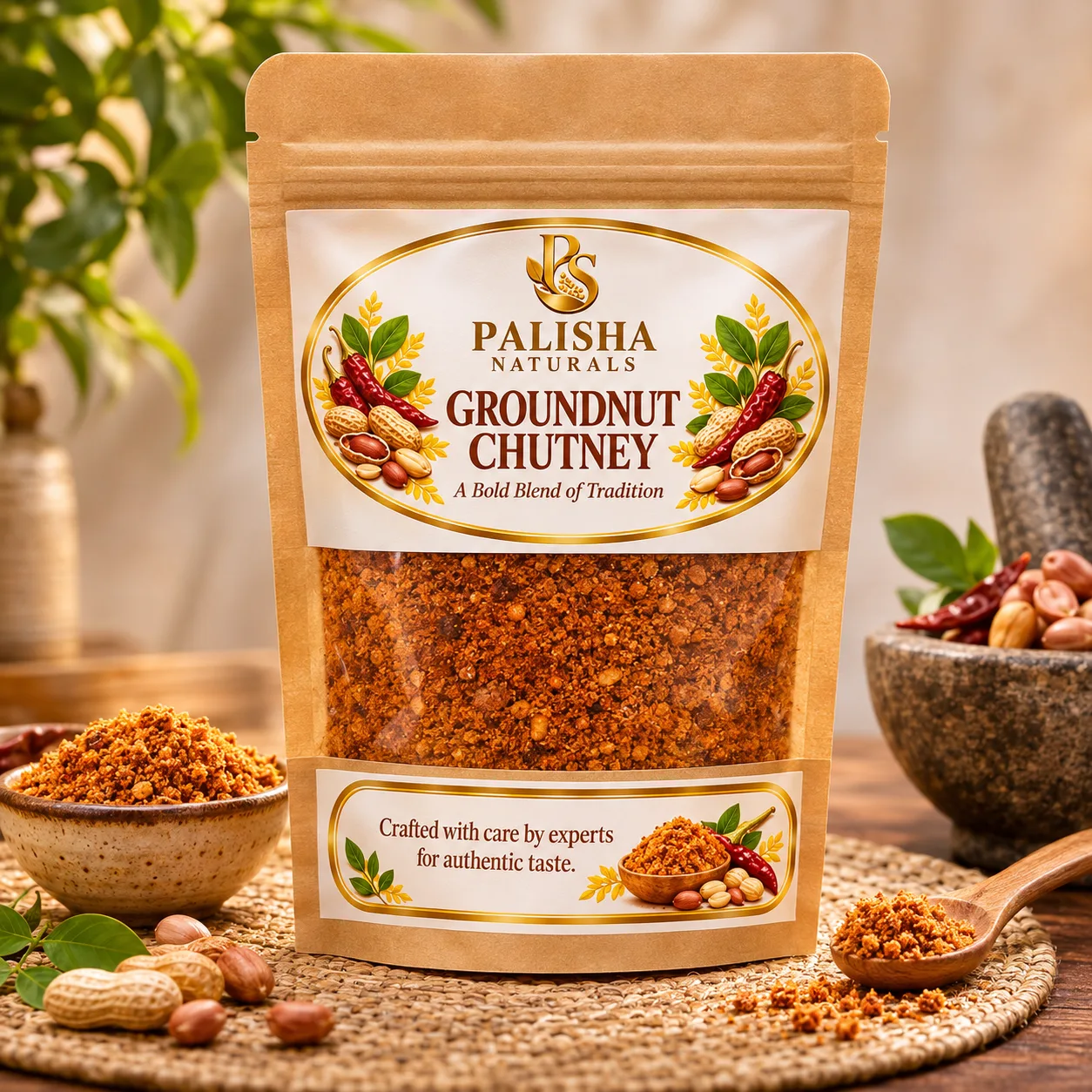
- Groundnut Chutney, 50 g, MRP Rs 35
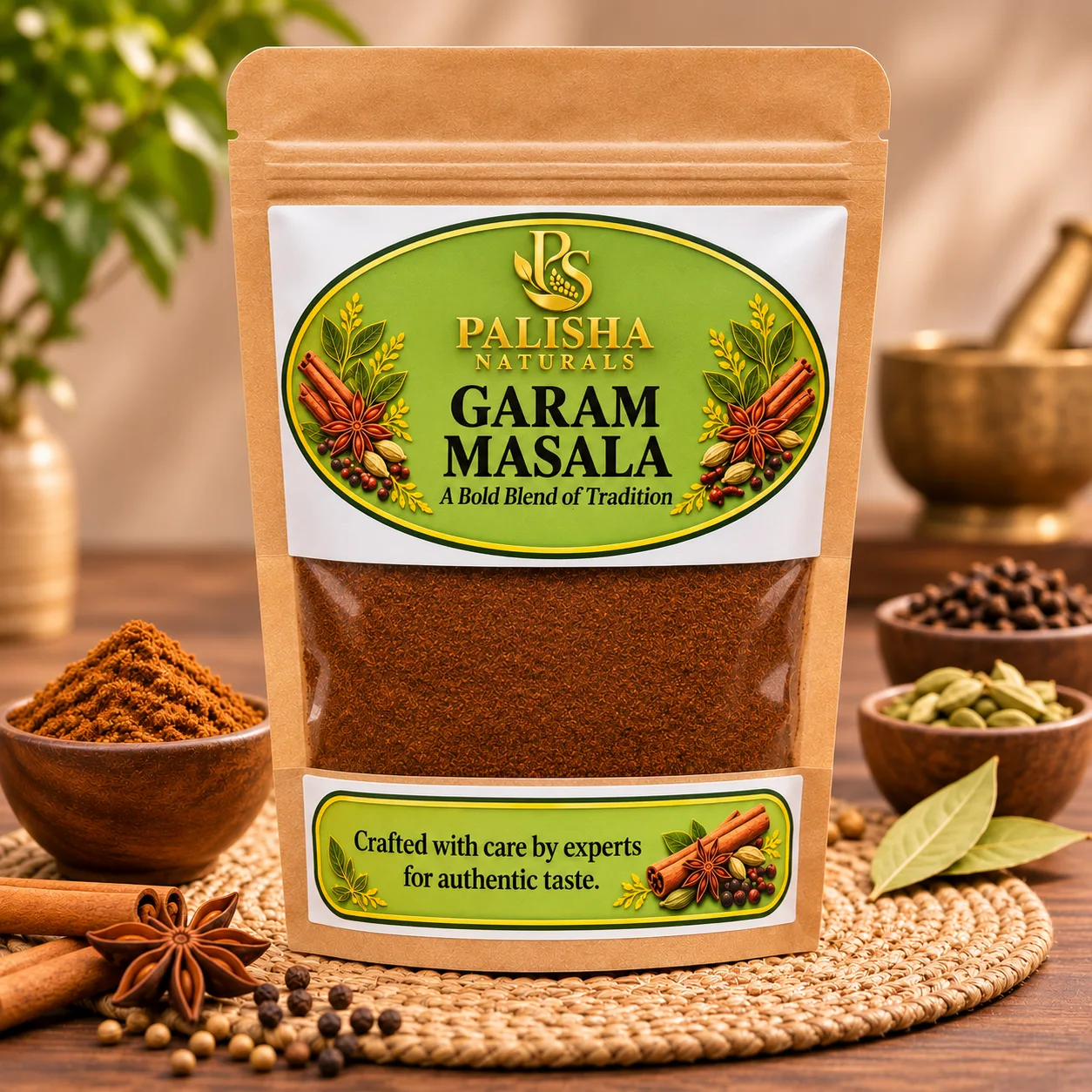
- Garam Masala, 50 g, MRP Rs 45
Pair it with our Groundnut Chutney and Garam Masala for the full Palisha kitchen.
A note on health claims
Be wary of any sattu listing that promises medical results or guaranteed weight loss. Sattu is a good traditional food, a source of plant protein and fibre, but it is not a medicine. If you have a specific health condition, speak to your doctor or a registered dietitian.
Where can you buy sattu online?
You can order Palisha Naturals Chana Sattoo directly from our shop. We pack in Bengaluru and ship across India. For questions about an order, bulk quantities or anything on the label, reach us through the contact page, on WhatsApp at 97397 11025, or on Instagram at @palishanaturals. To learn more about who we are, read about us.
Frequently asked questions
Where can I buy sattu in Bengaluru?
You can order Palisha Naturals Chana Sattoo online; it is packed in Ramamurthy Nagar, Bengaluru and shipped across the city and the rest of India.
How do I know if sattu is pure?
Check that the ingredient list says only roasted Bengal gram, that the pack carries an FSSAI licence number, and that the sattu is evenly golden with a fresh, nutty smell.
What is the shelf life of sattu?
Sattu without preservatives is best used fresh. Palisha Chana Sattoo carries a best-before of two months from packing.
Which pack size of sattu should I buy?
Choose the 250 g pack if you are trying sattu or use it occasionally, and the 500 g pack if you drink it daily or cook with it often.