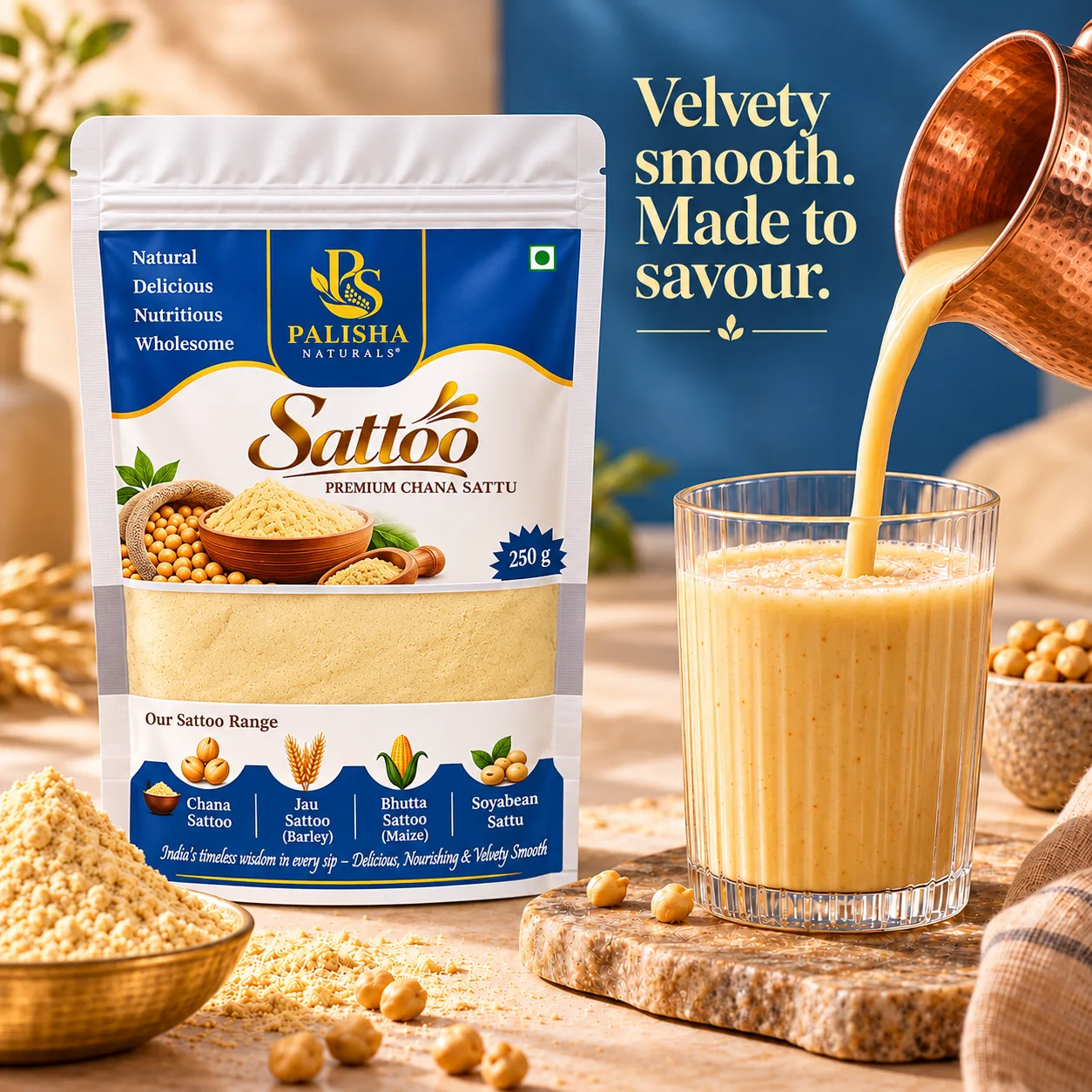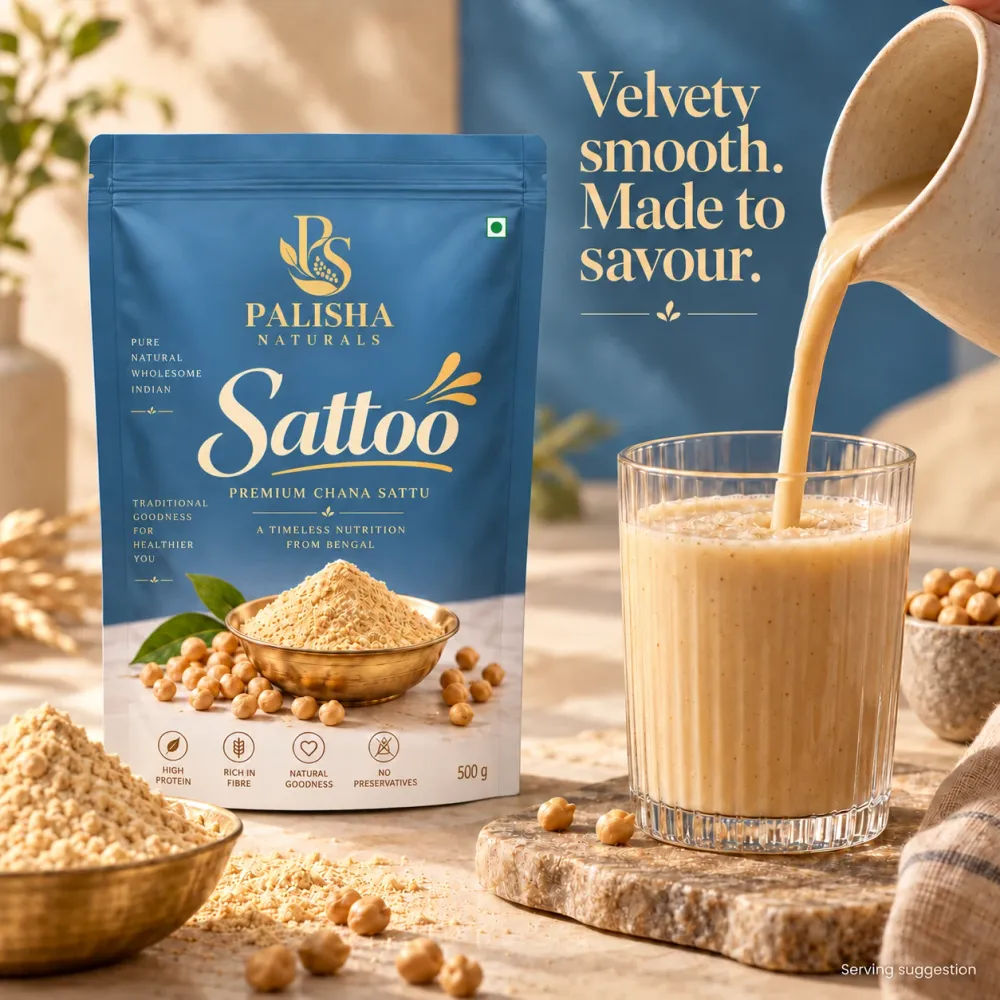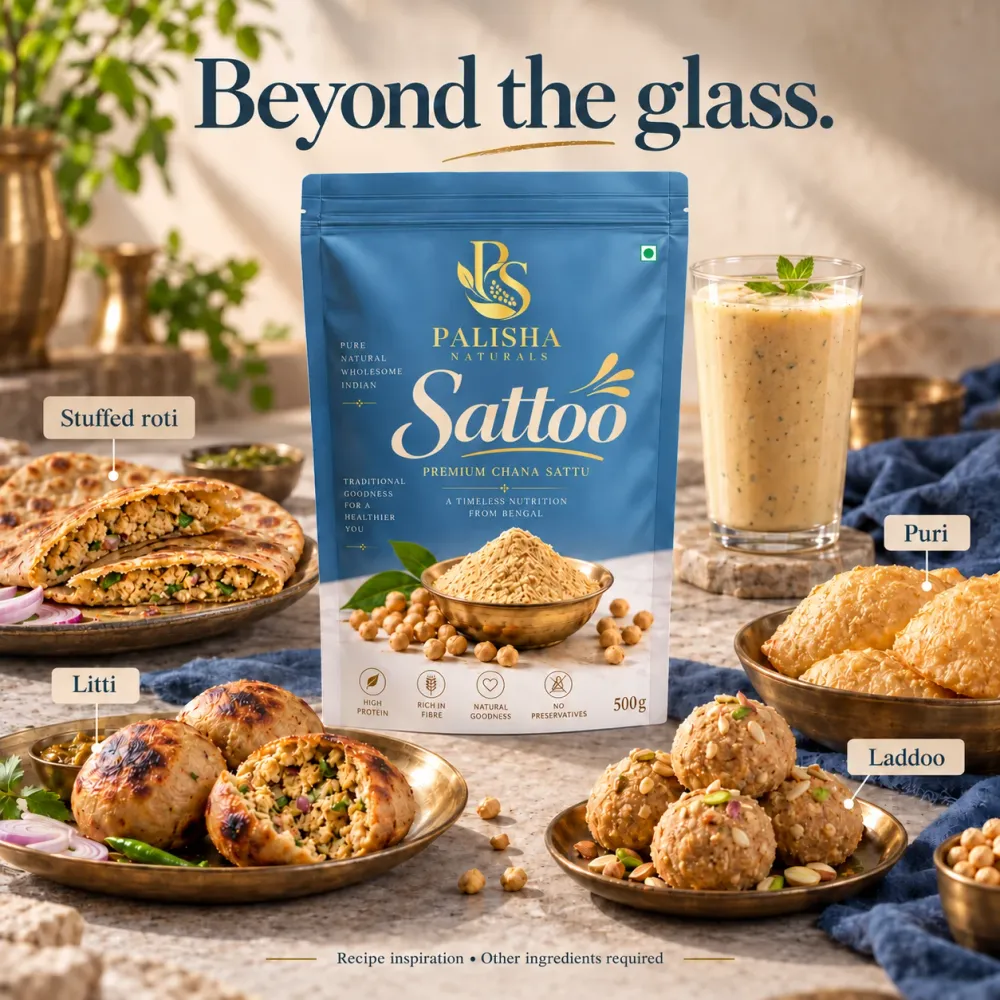


Sattu and whey protein do different jobs. Whey is a concentrated dairy supplement that delivers a lot of protein in a small scoop, while chana sattu is a whole food with about 24 g of protein per 100 g plus fibre and complex carbohydrate. If you want maximum protein per gram, whey wins; if you want an affordable, plant-based, everyday food that adds protein and keeps you full, sattu makes a lot of sense.
Many people in Indian gyms and offices now ask whether they can swap their protein powder for the sattu their grandparents drank. The fair answer is that it depends on what you are trying to do. Let us look at it properly.
What is the main difference between sattu and whey?
Whey protein is made from the liquid left over when milk is turned into cheese or paneer. It is filtered and dried into a powder that is mostly protein. Most whey concentrates on the market list somewhere around 70 to 80 g of protein per 100 g, and isolates go higher.
Sattu is roasted Bengal gram ground into flour. Nothing is extracted or concentrated. Our Chana Sattoo label shows 24.11 g protein, 61.17 g carbohydrate and 5.58 g fat per 100 g, with less than 1 g added sugar.
So one is a refined supplement and the other is a whole food. That single difference explains almost everything else in the comparison.
Which has more protein per serving?
Whey, comfortably. A single scoop of whey typically provides around 20 to 25 g of protein, depending on the brand. A glass of sattu made with 2 to 3 tablespoons (about 20 to 30 g) gives roughly 5 to 7 g. Even a generous 50 g serving of sattu gives about 12 g.
If you are an athlete with a high, specific protein target, sattu alone will not replace a concentrated supplement efficiently. It can, however, sit alongside dal, paneer, curd, eggs or other sources to raise your daily total without much effort.
What does sattu give you that whey does not?
Fibre and fullness
Sattu is made from whole roasted gram, so it keeps the fibre. Our pack carries a "rich in fibre" claim. Fibre plus protein is what makes a glass of sattu feel like a light meal rather than just a drink. Whey contains essentially no fibre.
Slow, steady energy
With roughly 61% carbohydrate that is mostly complex rather than added sugar, sattu gives the sustained energy our label mentions. That is useful mid-morning, before a long commute through Bengaluru traffic, or on a day of physical work.
A plant-based, dairy-free option
Sattu contains no dairy. For people who are lactose intolerant, vegan or simply prefer plant foods, that is a real advantage. Many people find whey concentrate uncomfortable to digest because of its lactose.
A short, readable label
Our sattu has one ingredient. Many flavoured protein powders carry sweeteners, flavourings, thickeners and added vitamins. None of that is necessarily harmful, but some people prefer to know exactly what they are eating.
What does whey do better?
To be balanced about it:
- Protein density. Whey packs far more protein into fewer calories.
- Amino acid profile. Dairy protein is complete on its own and is rich in leucine, which is why it is popular for muscle recovery. Chana protein is better balanced when eaten alongside cereals such as wheat or rice during the day.
- Convenience for precise tracking. A labelled scoop gives a predictable number, which matters to people who count grams carefully.
How do the costs compare?
Prices change, so we will not quote numbers that may be out of date by the time you read this. The general pattern is easy to check yourself: divide the pack price by the grams of protein it contains. Whey usually costs more per kilogram but gives more protein per kilogram. Sattu costs much less per kilogram and is a food you can also cook with, so a pack does several jobs in the kitchen.
Which tastes better?
That is personal. Whey is usually flavoured: chocolate, vanilla, coffee. Sattu tastes of what it is, nutty and toasty, and takes beautifully to Indian seasonings. The savoury glass with jeera, black salt and lemon is something whey simply cannot do. Sweetened with jaggery and a pinch of elaichi, it is closer to a dessert.
If you are used to sweet protein shakes, try our banana and sattu shake, which bridges the two.
Can you use sattu as a post-workout drink?
You can. Plenty of people in India do. A glass of sattu with milk gives a mix of protein and carbohydrate, and adding a banana makes it more substantial. Just be realistic about the numbers: if your trainer or dietitian has given you a specific protein target per meal, calculate whether your sattu serving meets it, or combine it with other foods.
Can you combine sattu and whey?
Yes, and it is a sensible middle path. Some people blend a scoop of unflavoured whey with 2 tablespoons of sattu, milk and a banana. The whey raises the protein; the sattu adds fibre, body and a familiar roasted flavour.
So which should you choose?
A simple way to decide:
- Choose sattu if you want an everyday, plant-based food that adds some protein, keeps you full, costs little and works in drinks, parathas and chillas.
- Choose whey if you have high, specific protein targets for training and want maximum protein with minimum calories.
- Use both if you want the density of one and the fullness and flavour of the other.
Whichever you choose, remember that most of your protein should still come from regular meals: dal, curd, paneer, legumes, eggs or meat if you eat them. Supplements and add-ons fill gaps; they do not replace a good plate of food.
If you have kidney disease, a specific medical condition or are training under supervision, please consult your doctor or a registered dietitian before changing your protein intake.
Where can you get sattu?
Our Premium Chana Sattoo is 100% roasted Bengal gram with nothing added, available in 250 g and 500 g packs. Packed in Bengaluru, shipped across India; browse the shop to order.
Frequently asked questions
Can sattu replace whey protein?
Not gram for gram. Whey is a concentrated supplement, while chana sattu has about 24 g protein per 100 g, so sattu works best as an everyday food that adds protein rather than a direct substitute.
Is sattu a good natural protein drink?
Sattu is a plant-based whole food that gives protein, fibre and steady energy in a simple drink. A glass made with 2 to 3 tablespoons provides roughly 5 to 7 g of protein.
Is sattu suitable for people who avoid dairy?
Yes. Chana sattu is made only from roasted Bengal gram and contains no dairy, so it can be mixed with water or plant milk.
Can I mix sattu and whey together?
Yes. Blending a little sattu with whey and milk adds fibre and a roasted flavour while keeping protein high.