
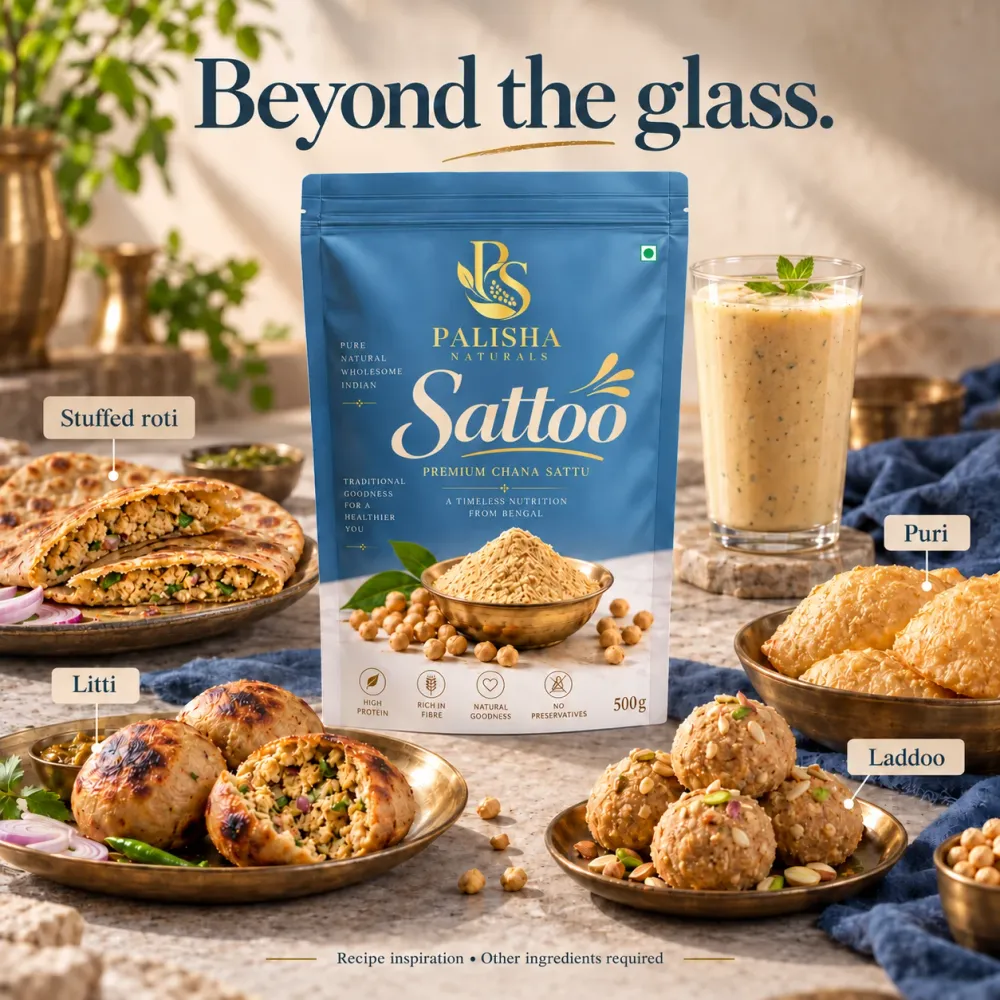
Sattu paratha and litti share the same heart: a spiced filling of roasted gram flour mixed with mustard oil, garlic, ginger, green chilli, ajwain, lemon and pickle masala. For paratha, the filling is rolled into a wheat dough and cooked on a tawa with ghee. For litti, it is packed into dough balls that are baked or roasted over coals and served with chokha, a smoky mash of brinjal, potato and tomato.
These are the dishes that people from Bihar and Jharkhand miss most when they move away, whether to Delhi, Mumbai or Bengaluru. Both are easy to make in a city kitchen once you have good sattu.
How do you make the sattu filling?
Get the filling right and everything else follows. This makes enough for 8 parathas or 12 to 14 litti.
Ingredients
- 1 cup (about 120 g) Chana Sattoo
- 1 medium onion, very finely chopped
- 6 to 8 cloves garlic, finely chopped or grated
- 1 inch ginger, grated
- 2 green chillies, finely chopped
- 3 tablespoons chopped coriander leaves
- 1 teaspoon ajwain (carom seeds)
- 1 teaspoon kalonji (nigella seeds)
- 1 teaspoon roasted jeera powder
- 1 tablespoon oil from a mango or lemon pickle, plus a little pickle masala
- 2 tablespoons mustard oil
- Juice of 1 lemon
- Salt to taste
- 2 to 4 tablespoons water
Method
- Put the sattu in a wide bowl and add everything except the water.
- Rub the mixture between your fingers so the oil coats the flour evenly.
- Sprinkle in water a spoon at a time until the filling holds together when pressed in your fist but still crumbles when you poke it. Too wet and it will ooze when rolling; too dry and it will taste powdery.
- Taste. It should be sharp, salty, sour and hot, because the dough around it will mellow it.
Mustard oil is what makes it taste Bihari. If you are not used to its pungency, warm the oil until it just begins to smoke, then let it cool before using.
How do you make sattu paratha?
Dough
Knead 2 cups whole wheat atta with a pinch of salt, 1 teaspoon oil and enough water to make a soft, pliable dough, slightly softer than for roti. Cover and rest for 20 minutes.
Rolling and cooking
- Divide the dough into 8 balls. Roll one into a 4-inch disc.
- Place 2 heaped tablespoons of filling in the centre.
- Bring the edges up and pinch to seal, like a potli. Flatten gently.
- Dust with flour and roll out evenly to about 6 to 7 inches, pressing lightly so the filling does not break through.
- Cook on a hot tawa. Flip when small bubbles appear, then cook the second side.
- Brush with ghee or oil on both sides and press with a spatula until golden spots appear.
Serve hot with curd, green chutney, pickle or a simple aloo sabzi. A sattu paratha with a bowl of curd makes a filling breakfast or lunch on its own.
How do you make litti?
Dough
Litti dough is firmer than paratha dough. Knead 2 cups whole wheat atta with half a teaspoon of salt, half a teaspoon of ajwain, 2 tablespoons ghee and enough water to make a stiff dough. Rest for 15 to 20 minutes.
Shaping
- Divide the dough into 12 to 14 balls, each a little larger than a lemon.
- Flatten each into a cup with your thumbs.
- Fill with a generous tablespoon of sattu filling, then gather the edges and seal well.
- Roll gently between your palms to form a smooth ball.
Cooking without a coal fire
Traditionally, litti are roasted over cow-dung cakes or a charcoal fire, which gives them their smoky crust. In a flat, an oven or air fryer works well.
- Oven: Bake at 200°C for 25 to 30 minutes, turning once halfway, until the crust is firm and lightly charred in spots.
- Air fryer: Cook at 180°C for 18 to 20 minutes, turning once.
- Appe pan: Cook covered on a low flame, turning often, for 20 to 25 minutes.
Once cooked, crack each litti slightly and dip it in warm ghee. That last step is not optional in Bihar.
How do you make chokha?
Chokha is the smoky mash that turns litti into a meal.
- Roast 1 large brinjal directly on the gas flame until the skin is charred and the flesh soft. Roast 2 tomatoes the same way.
- Boil 2 medium potatoes.
- Peel all three and mash together.
- Add finely chopped onion, garlic, green chilli and coriander, a tablespoon of raw mustard oil, salt and a squeeze of lemon.
Some families make a separate baingan chokha and aloo chokha. Either way, the raw mustard oil is the signature.
What else can you make with sattu filling?
The same mixture goes into sattu kachori, stuffed puri and even sattu-stuffed bati. For a quicker option, mix sattu into besan chilla batter, or add a few spoons of plain sattu to your regular roti dough for a nutty flavour and extra plant protein. A pinch of Garam Masala in the filling, while not traditional for litti, gives sattu paratha a warmer, more North Indian flavour that many families like.
What are the common mistakes?
- Using besan instead of sattu. Besan is raw and will taste bitter. Sattu is already roasted.
- A wet filling. It makes the paratha tear. Add water sparingly.
- Skipping the rest time. Unrested dough shrinks back and splits.
- Under-seasoning. The filling should taste bold on its own.
Where can you get sattu for these recipes?
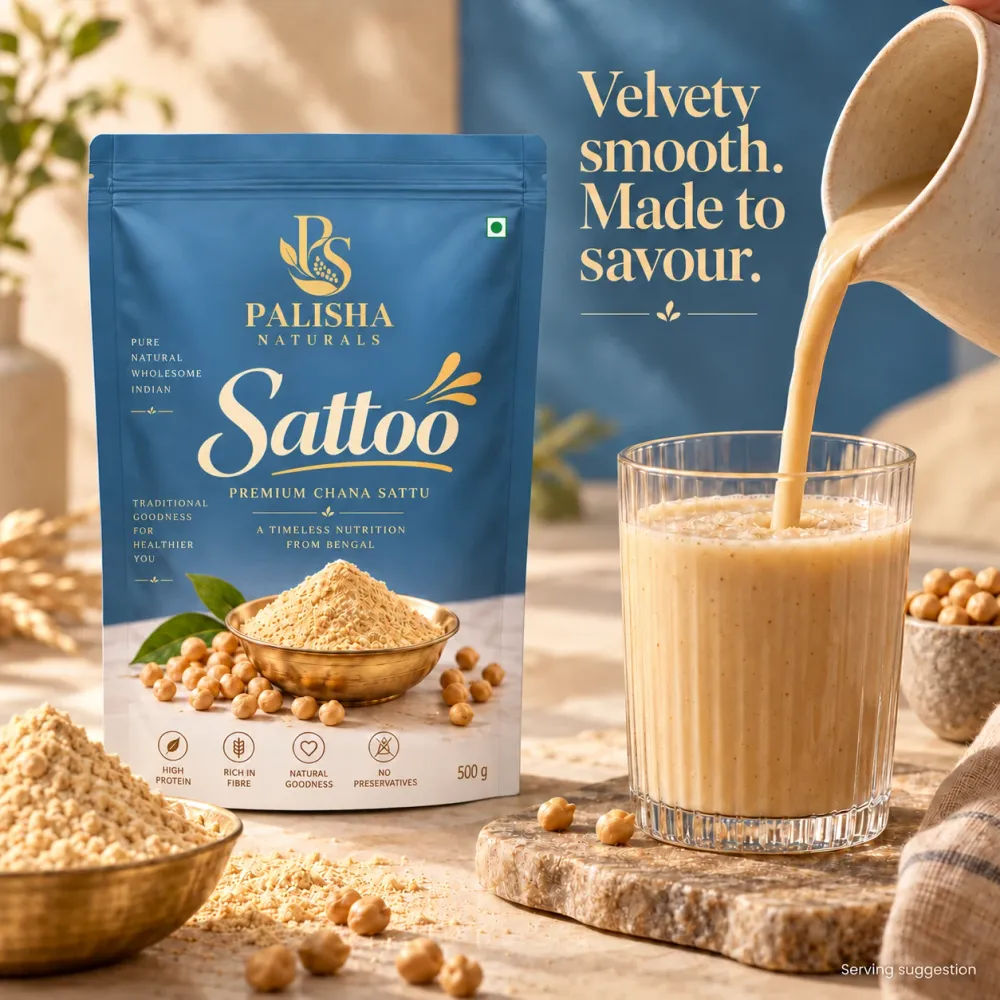
Our Premium Chana Sattoo is single-ingredient roasted Bengal gram, the right base for a traditional filling. The 500 g pack is the practical size if you plan to cook with it. Find more ideas on our recipes page or learn more in What is sattu?.
Frequently asked questions
What is the filling in litti made of?
Litti filling is chana sattu mixed with mustard oil, garlic, ginger, green chilli, ajwain, kalonji, lemon juice, pickle masala, onion, coriander and salt.
Can I make litti without a coal fire?
Yes. Bake litti at 200°C for 25 to 30 minutes in an oven, or at 180°C for 18 to 20 minutes in an air fryer, turning once.
Why does my sattu paratha tear while rolling?
Usually the filling is too wet or the dough is too stiff or unrested. Keep the filling crumbly and rest a soft dough for 20 minutes.
Can I use besan instead of sattu for paratha?
No. Besan is raw gram flour and will taste bitter and pasty as a filling; sattu is roasted and is meant to be used as it is.