
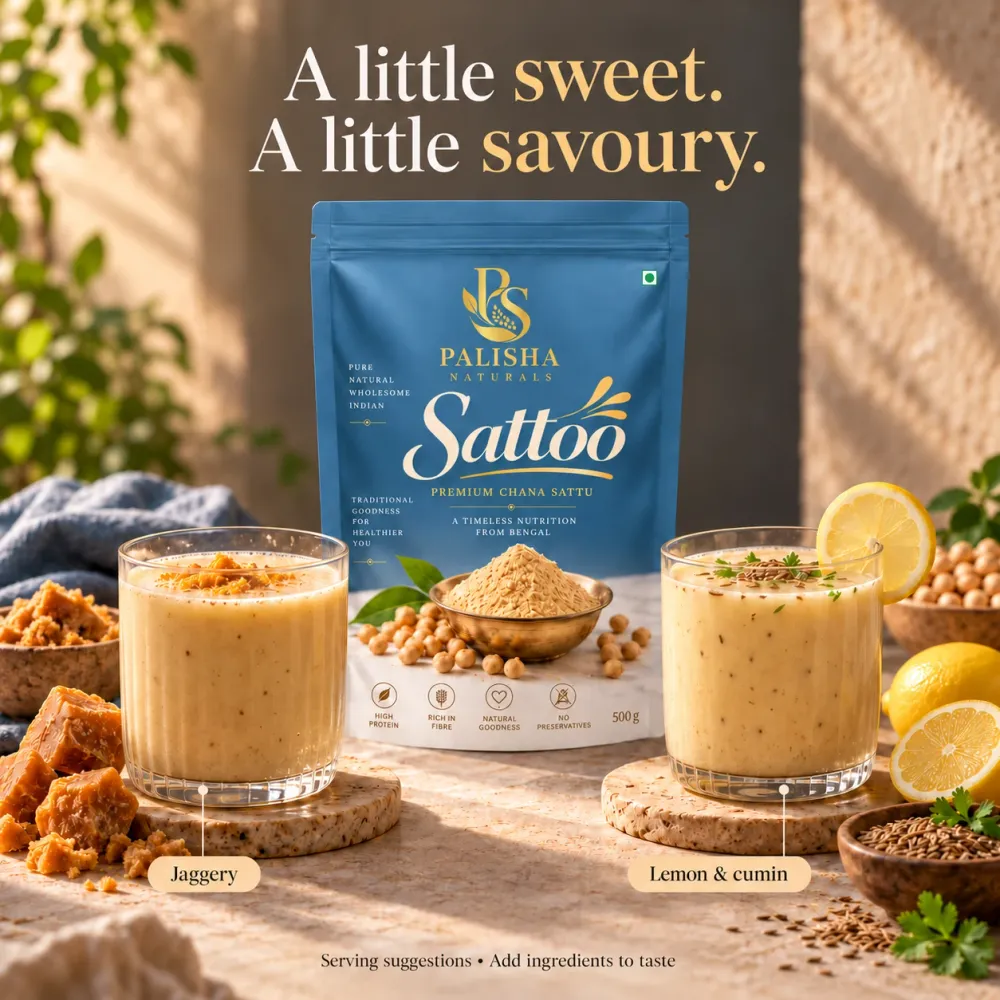
Sattu is a summer favourite in India because it is a filling, no-cook drink that takes a few minutes to make with cool water, salt and lemon. In Bihar, Jharkhand, eastern Uttar Pradesh and Bengal, it has long been regarded as a cooling food, and the salted version replaces some of the salt lost through sweat while the roasted gram keeps you full through a hot afternoon. It costs little, needs no refrigeration as a dry flour and travels anywhere.
The tradition is old and practical. Let us look at where it comes from and how to make the most of it when the temperature climbs.
Why is sattu traditionally drunk in summer?
Long before packaged drinks, Indian summers had their own coolers: aam panna, nimbu pani, chaas, kokum sharbat, bel sharbat and, across the eastern Gangetic plains, sattu. Each region chose what grew around it. In Bihar, the gram harvest arrives just as the heat builds, so roasted chana flour became the natural base.
Several reasons kept it there:
- It needs no cooking. In a season when standing at a stove is the last thing anyone wants, sattu goes straight from the jar into the glass.
- It is food as well as drink. Workers in the fields or on construction sites could not stop for long meals. A tall glass of sattu with salt and onion carried them for hours.
- It keeps well. Dry, roasted flour stores better than fresh food in the heat.
- It is affordable. Sattu has always been within reach of most households.
In many homes, sattu is also described as thanda, or cooling, in the sense older Indian food traditions use the word. That is a cultural classification rather than a measured effect, but it is part of why grandmothers push a glass into your hand in May.
Is sattu good to drink in summer?
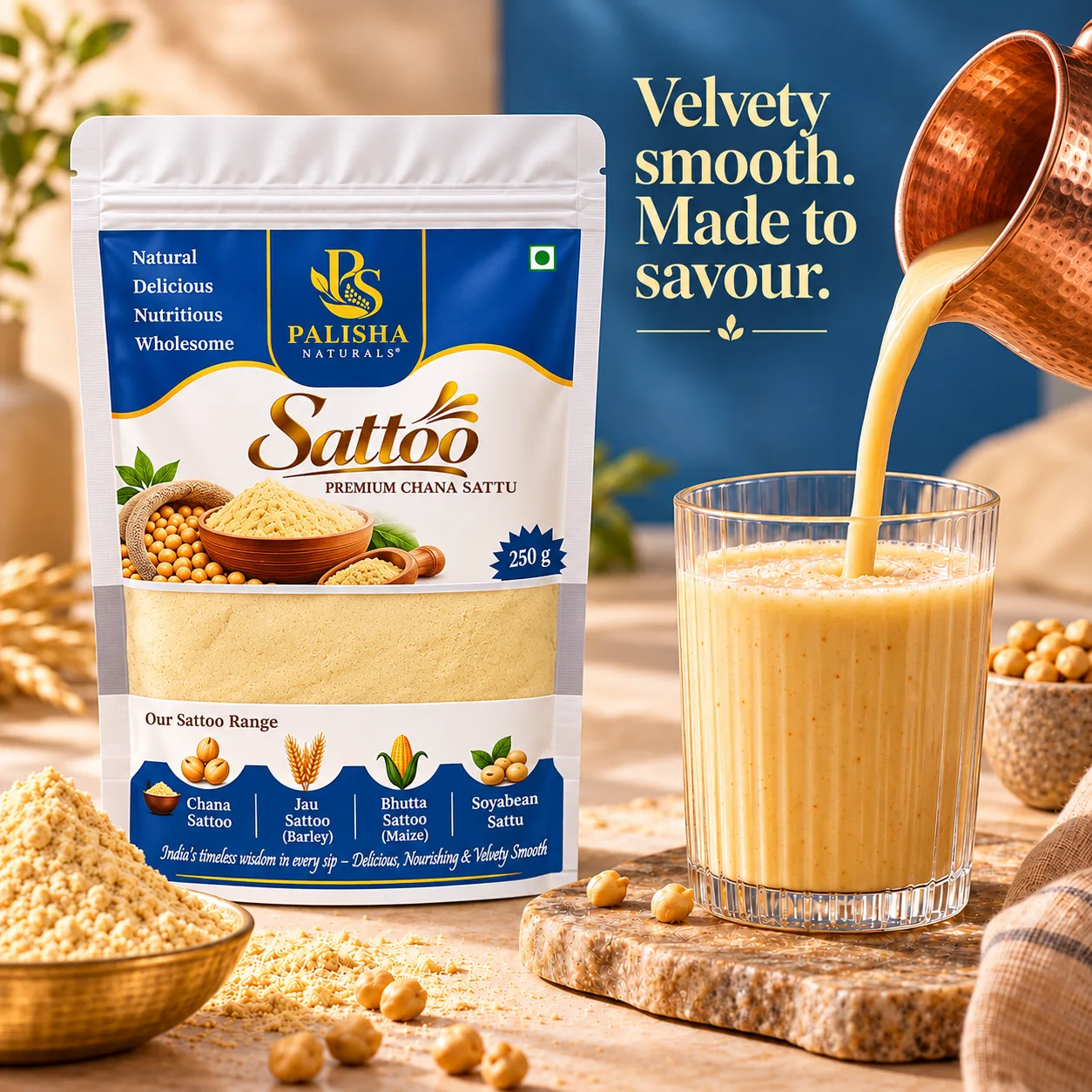
For most people, yes. A glass of sattu made with cool water is hydrating simply because it is mostly water, and the salt in the savoury version is welcome after a day of sweating. Chana sattu also gives protein, fibre and steady energy; our Chana Sattoo label shows about 24 g protein per 100 g with under 1 g added sugar. Compared with many bottled sweet drinks, it is a more filling choice with far less sugar, as long as you go easy on the jaggery.
On very hot days, drink plenty of plain water as well. Sattu is a good addition to your fluids, not a replacement for them.
How do you make a sattu summer cooler?
The classic summer glass is savoury.
- Make a smooth paste of 2 to 3 tablespoons sattu with a few spoons of cool water.
- Top up with 250 ml cold water.
- Add a pinch each of salt and black salt, half a teaspoon roasted jeera powder and the juice of half a lemon.
- Stir in finely chopped onion, green chilli and fresh mint.
- Drink immediately, stirring between sips.
For full details and the sweet version, see How to make sattu drink.
Three summer variations
- Sattu chaas: Whisk sattu into thin buttermilk with salt, roasted jeera, a few curry leaves and a pinch of hing. It suits a South Indian lunch perfectly.
- Kachcha aam sattu: Add a spoon of raw mango pulp or aam panna concentrate for a tart edge.
- Pudina sattu: Blend sattu, water, a handful of mint, lemon, black salt and ice into a frothy green drink.
When is the best time to drink sattu in summer?
Traditionally, sattu sharbat is taken mid-morning, before stepping out, or in the afternoon when the heat peaks and lunch feels heavy. Many people in cities like Bengaluru now keep a pack in the office pantry for that 4 pm slump. There is no rule; our pack simply says to enjoy it any time.
Some families avoid it late at night because it is filling. That is a matter of comfort rather than any fixed principle.
Can you drink sattu every day in summer?
Most healthy adults can enjoy one or two glasses daily through the season as part of a varied diet. Because chana is fibre-rich, start with smaller servings if you are new to it and increase gradually. If you have diabetes, kidney concerns or digestive issues, or if you are pregnant, check with your doctor or dietitian about what suits you.
What about Bengaluru's weather?
Bengaluru is milder than Patna, but March to May still gets properly hot, and the sun in the afternoon is fierce. Sattu travels well into a southern kitchen. It pairs naturally with buttermilk, curry leaves and lemon, flavours every Karnataka household already uses. Many of our customers here first tasted sattu through a colleague from the north or east and now keep it alongside their ragi.
How should you store sattu in hot, humid weather?
Summer and monsoon humidity are the main enemies of any roasted flour.
- Keep sattu in an airtight steel or glass jar.
- Always use a completely dry spoon.
- Store it away from the stove, the kettle and direct sunlight.
- Close the pack or jar quickly after use.
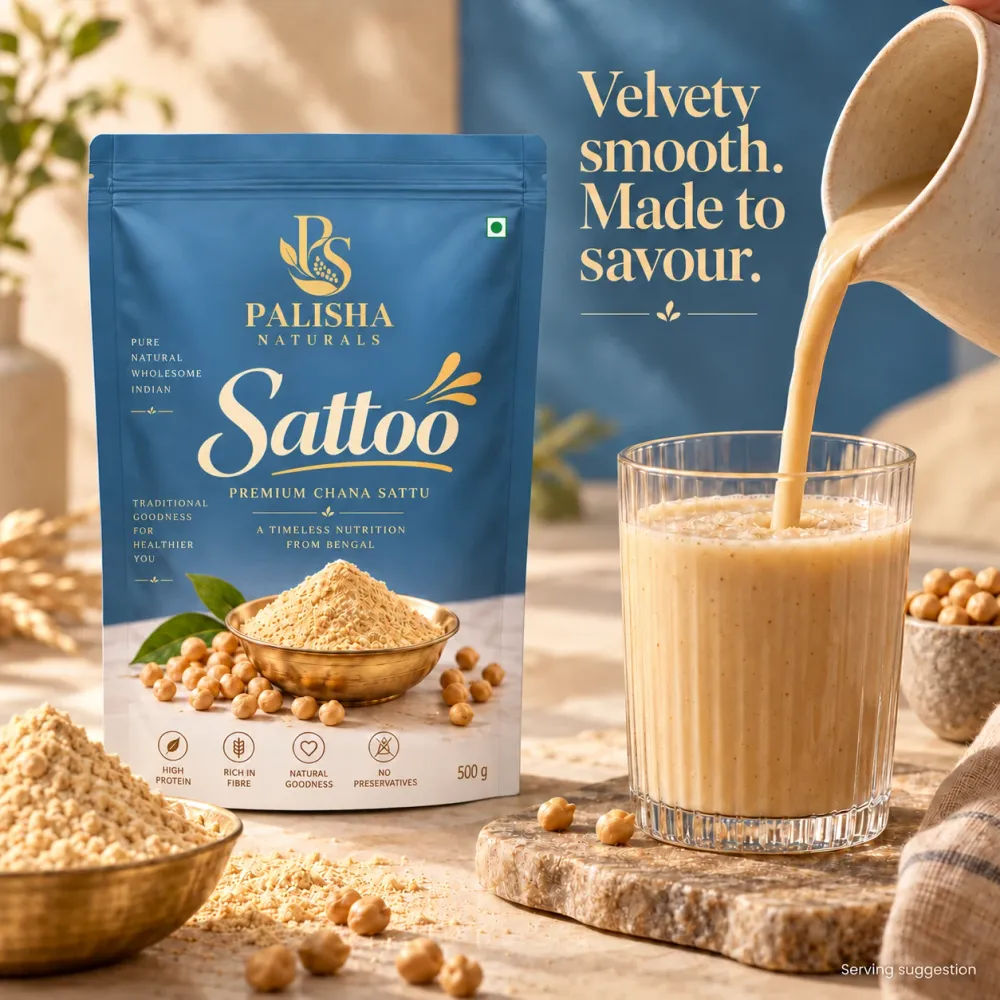
- Buy a pack size you will finish within its best-before period. Our Chana Sattoo carries a two-month best-before, which is why we offer a 250 g pack as well as a 500 g pack.
If sattu ever smells musty or sour, or shows clumps that do not break easily, do not use it.
Which sattu is best for summer?
Chana sattu is the most common and the most versatile. Barley sattu (jau sattu) is the other traditional summer choice, especially in parts of Uttar Pradesh and Bihar, and has a lighter, slightly sweeter taste. Our Premium Chana Sattoo, packed in Bengaluru and shipped across India, is ready for the season. Browse the full range in our shop.
Frequently asked questions
Is sattu good in summer?
Yes, for most people. Sattu with cool water, salt and lemon is a filling, no-cook drink that has long been a summer staple across Bihar, Jharkhand and Bengal.
Is sattu cooling for the body?
Traditional Indian food wisdom classes sattu as cooling, and it is widely drunk for that reason in hot months. This is a cultural description rather than a medical claim.
What is the best sattu drink for summer?
The savoury sattu sharbat with cold water, black salt, roasted jeera, lemon, onion and mint is the classic summer version.
How do I keep sattu fresh in humid weather?
Store it in an airtight jar away from heat and steam, and always use a dry spoon. Finish it within the best-before period on the pack.