
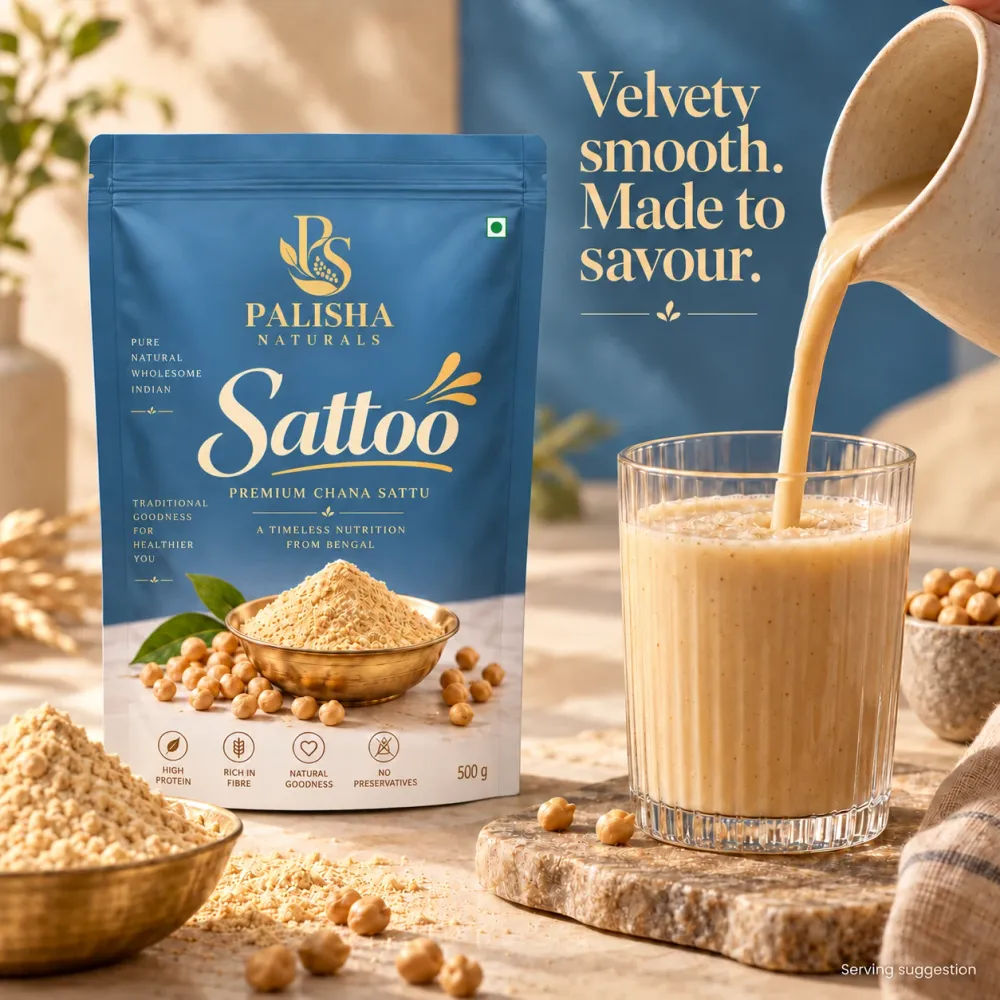
Sattu is a flour made by dry-roasting whole grains or pulses, most commonly Bengal gram (chana), and then grinding them fine. Because the grain is already roasted, sattu is ready to eat: you can stir it into water or milk and drink it straight away, or knead it into a filling for parathas and litti. It is a plant-based source of protein and a pantry staple across Bihar, Jharkhand, eastern Uttar Pradesh, Bengal and Odisha.
That is the short answer. The longer one is worth knowing, because sattu sits at an interesting point between food, drink and tradition.
What is sattu made of?
Classic chana sattu is made from one ingredient: Bengal gram, the small brown-skinned chickpea that most Indian homes simply call chana. The gram is roasted, traditionally in hot sand inside a large iron kadhai, until it turns crisp and fragrant. It is then cooled, partly or fully dehusked, and ground into a fine, pale-gold powder.
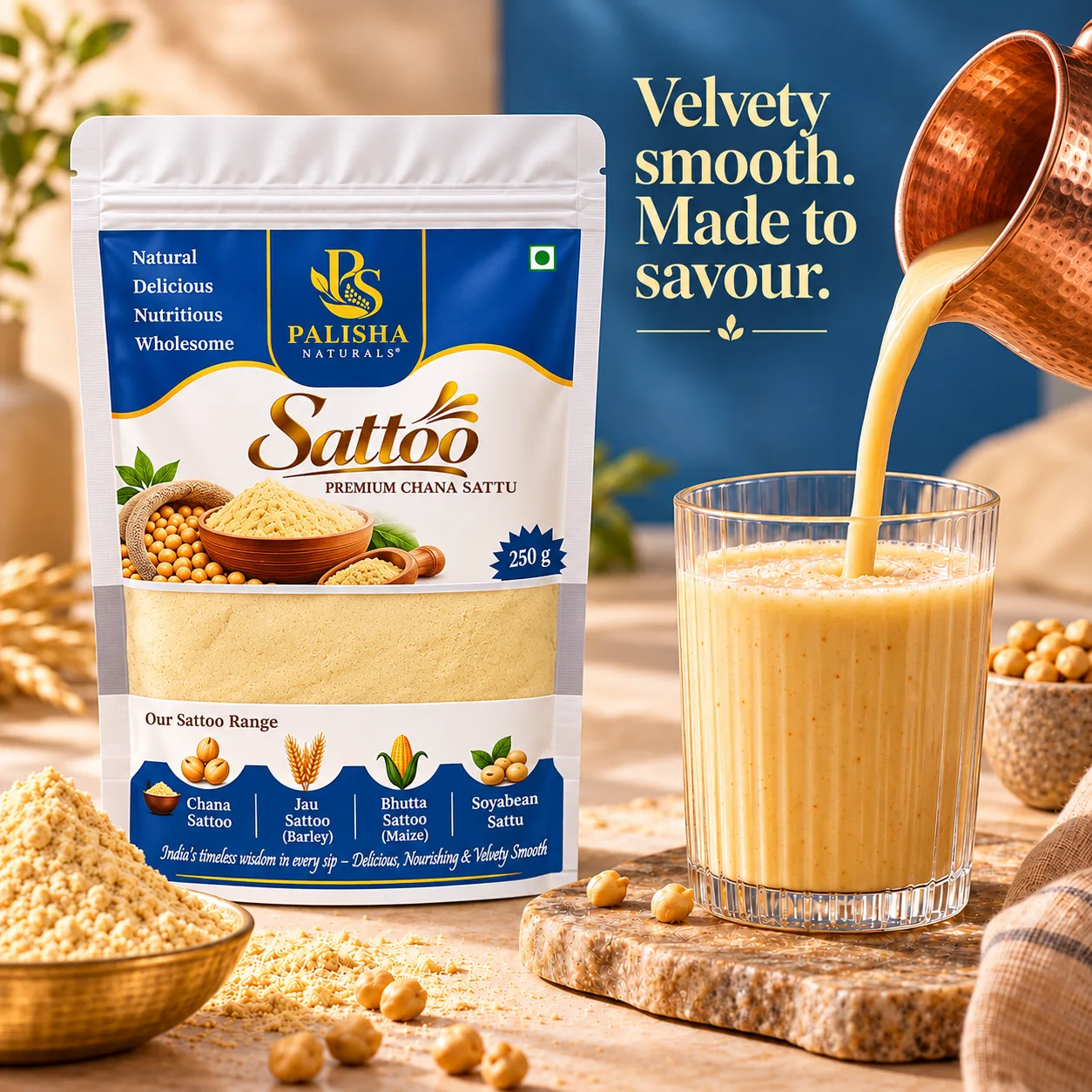
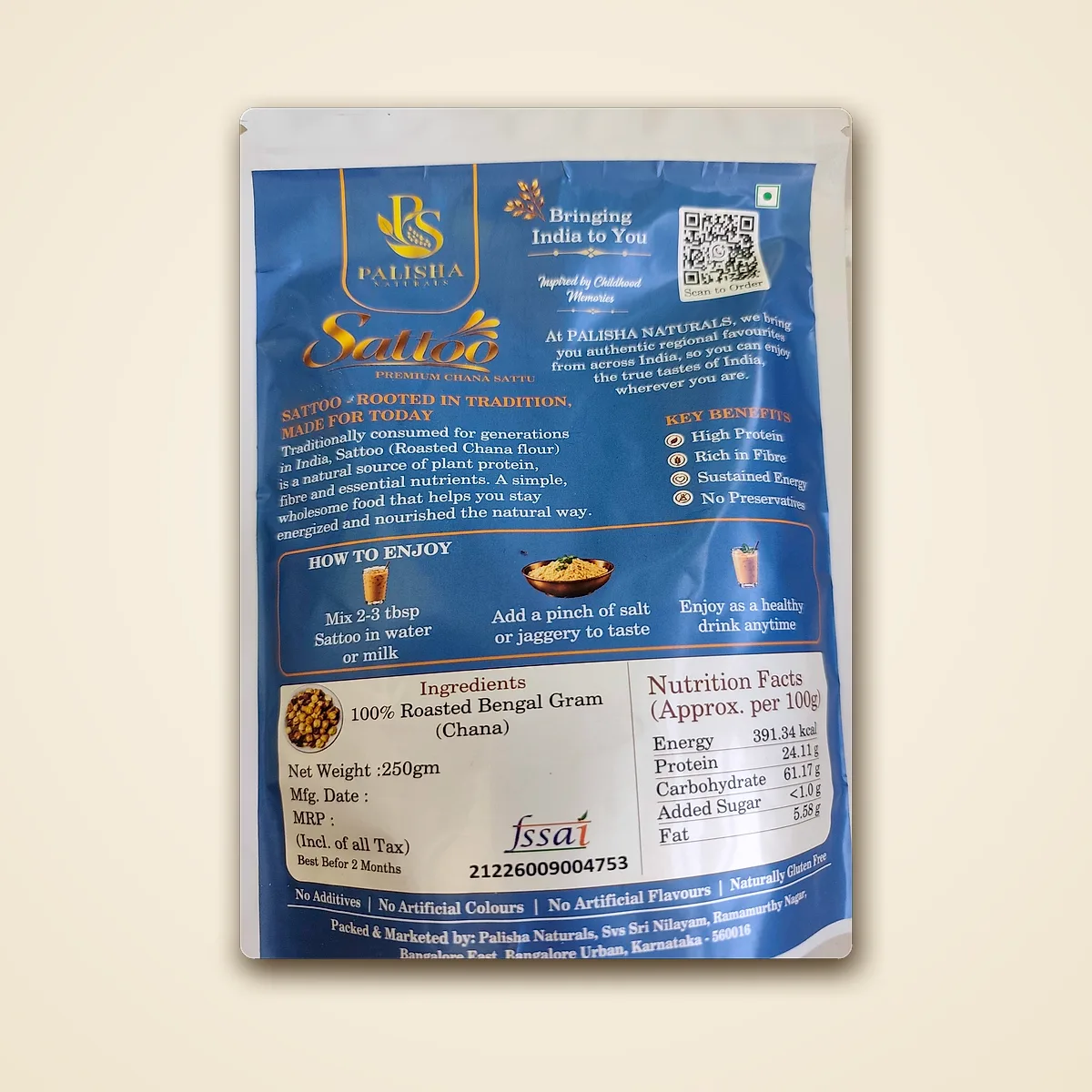
Our Premium Chana Sattoo follows exactly this idea. The label lists a single ingredient, 100% roasted Bengal gram, with no preservatives, no additives, no artificial colours and no artificial flavours.
Other grains are made into sattu too. In many villages you will find:
- Jau sattu, made from roasted barley, lighter in colour and slightly sweeter
- Makka or bhutta sattu, made from roasted maize
- Mixed sattu, where chana is blended with barley, wheat or other grains
Our own Premium Chana Sattoo is the classic: 100% roasted Bengal gram.
How is sattu different from besan?
Both come from chana, which is why people confuse them. The difference is the roast.
- Besan is ground from raw, split and skinned chana dal. It must be cooked before eating, which is why it goes into pakoras, kadhi and laddoos that are fried or roasted.
- Sattu is ground from gram that has already been roasted. It is cooked before it is milled, so it can be eaten as it is.
You can taste the difference immediately. Raw besan has a grassy, slightly bitter note. Sattu tastes nutty and toasty, closer to roasted chana from a street vendor's cone. Sattu also absorbs water differently, so do not swap one for the other in a recipe without adjusting.
Where does sattu come from?
Sattu is most closely tied to Bihar, where it is part of everyday life: a glass of sattu sharbat in the afternoon, a plate of litti chokha on a Sunday, a handful mixed with onion and chilli as a quick meal for a long day in the fields. The same tradition runs through Jharkhand, Purvanchal, Bengal (where it is often called chhatu) and Odisha.
Its popularity there comes down to practical reasons. Roasted grain flour keeps well, travels easily, needs no cooking and turns into a filling meal with just water and salt. Labourers, travellers and pilgrims carried it for exactly that reason.
The name comes up in many variations: sattu, sattoo, sattua, satu, chhatu. On our packs we write Sattoo, the spelling many families in the north use, but it is the same food.
How do you eat sattu?
Sattu is unusually flexible. Here are the most common ways it shows up on Indian tables.
As a drink
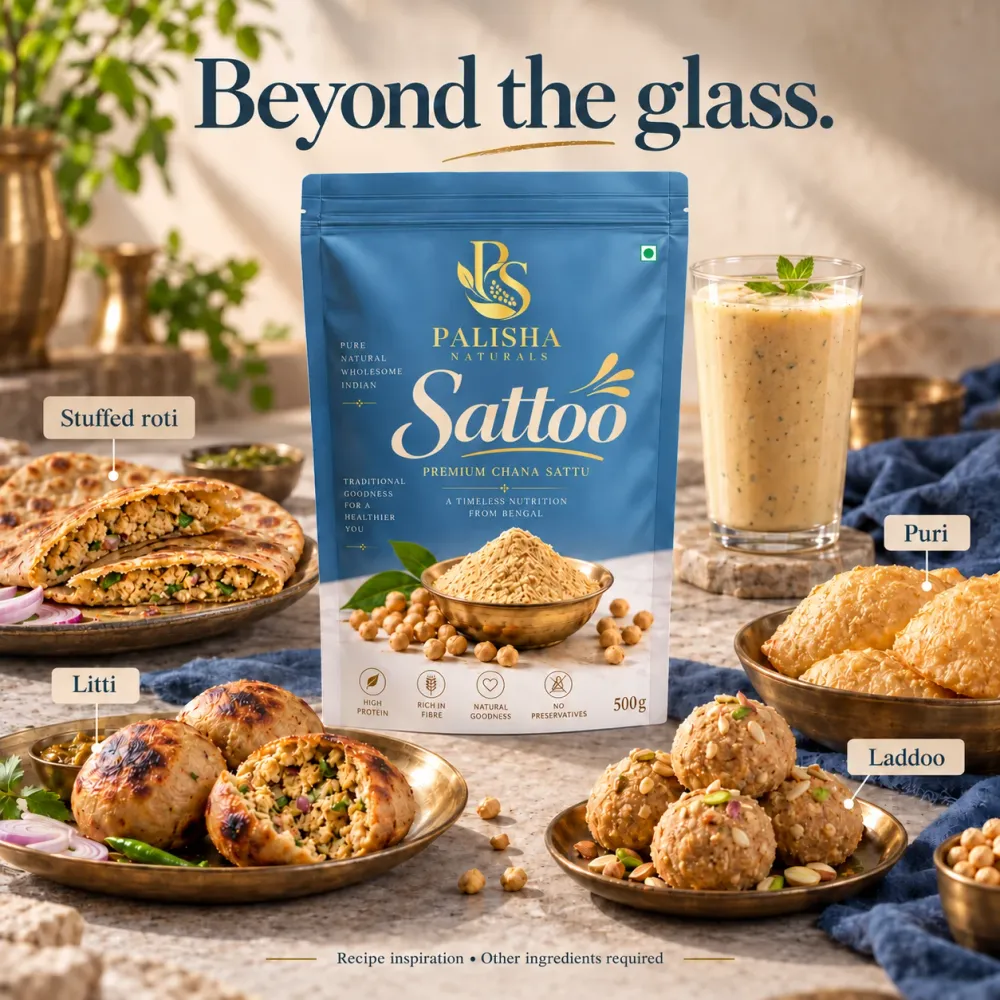
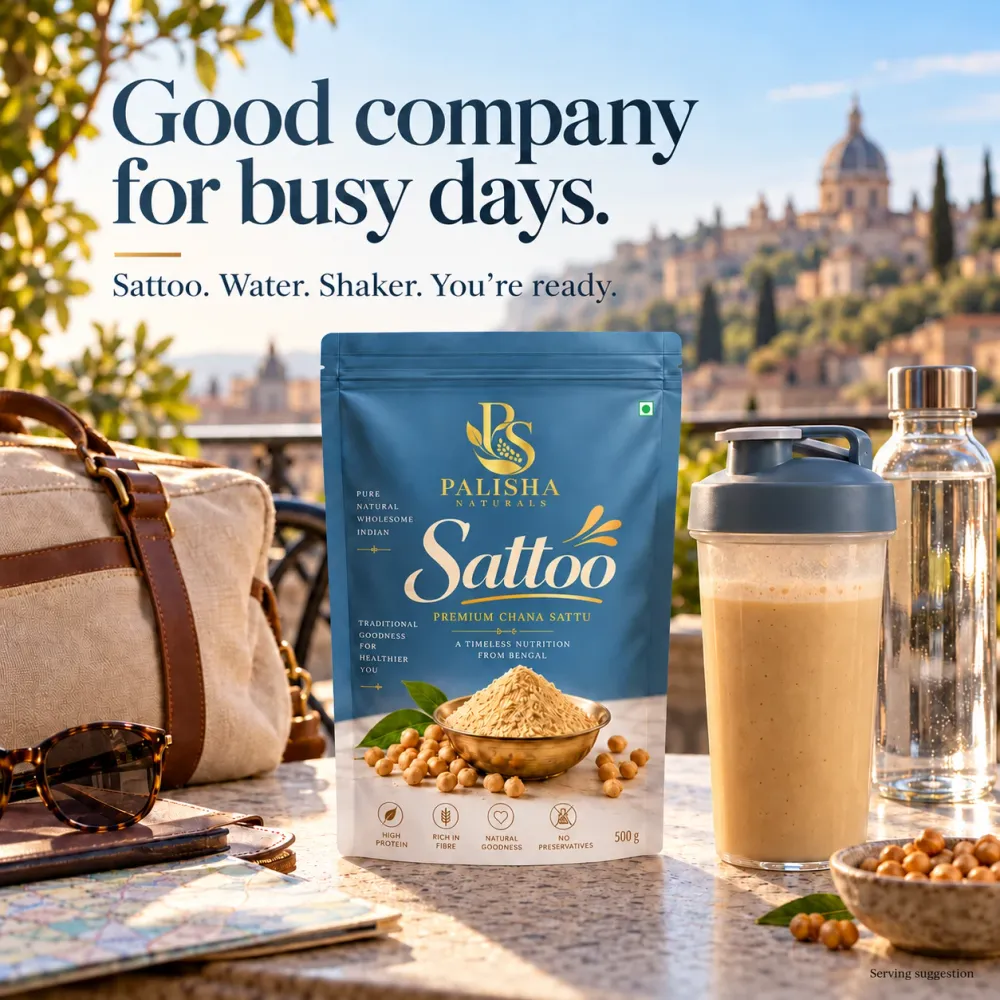
The simplest use. Mix 2 to 3 tablespoons in a glass of water or milk, add a pinch of salt or a little jaggery, stir well and drink. The savoury version is often finished with roasted jeera powder, black salt, lemon, chopped onion, green chilli and mint. We have a full guide on how to make sattu drink.
As a stuffing
Sattu mixed with mustard oil, garlic, ginger, green chilli, ajwain, lemon juice, pickle masala and chopped coriander makes the classic filling for litti and sattu paratha. See our Bihari litti and sattu paratha recipes.
As a quick meal
In many homes, sattu is kneaded with a little water, salt, onion and green chilli into soft balls and eaten with pickle. It is the original ready-to-eat food.
In modern kitchens
People in cities such as Bengaluru, Pune and Delhi now add sattu to smoothies, overnight oats, chillas, laddoos and even rotis to bring in some extra plant protein. Since it is already roasted, it blends in without a raw taste.
Is sattu healthy?
Chana sattu is a source of plant protein and fibre, with relatively little fat. On our pack, a 100 g serving is printed as roughly 391 kcal, 24.11 g protein, 61.17 g carbohydrate and 5.58 g fat, with added sugar below 1 g. It is also naturally gluten free when made from pure chana. We break these numbers down in Sattu nutrition explained.
What sattu is not is a medicine. It is a wholesome traditional food, and like any food it works best as part of a varied diet. If you have a specific health condition or dietary requirement, speak to your doctor or a registered dietitian before making big changes.
What should good sattu look and smell like?
When you open a fresh pack, look for:
- An even, light golden colour. Very pale sattu may be under-roasted; dark brown flecks can mean scorching.
- A warm, nutty smell. It should never smell musty, sour or oily.
- A fine, soft texture that does not clump hard when pressed.
- A short ingredient list. For chana sattu, one ingredient is all you need.
Store it in a dry, airtight jar, away from steam and sunlight, and use a dry spoon every time. Our Chana Sattoo carries a best-before of two months, which is honest for a product with no preservatives.
Why we make sattu in Bengaluru
Palisha Naturals began with a simple thought printed on every pack: Inspired by Childhood Memories. Many of us who grew up with sattu in the north, east or in a family that came from there, now live far from home, in cities such as Bengaluru. Good sattu was surprisingly hard to find here. So we pack and market it from Ramamurthy Nagar in Bengaluru and ship it across India.
If you are trying sattu for the first time, start with the 250 g pack of Chana Sattoo and a simple glass of salted sattu drink. If you already know what you are looking for, the 500 g pack is the better buy. You can see everything we make on the shop page.
Frequently asked questions
What is sattu made of?
Chana sattu is made from Bengal gram that is dry-roasted and then ground into fine flour. Palisha Naturals Chana Sattoo has one ingredient: 100% roasted Bengal gram.
Is sattu the same as besan?
No. Besan is ground from raw chana dal and must be cooked, while sattu is ground from roasted gram and can be eaten without further cooking.
Can sattu be eaten without cooking?
Yes. Because the grain is roasted before milling, sattu can be mixed into water, milk or a stuffing and eaten as it is.
Where is sattu traditionally eaten?
Sattu is a staple in Bihar, Jharkhand, eastern Uttar Pradesh, Bengal and Odisha, and is now popular across India, including Bengaluru.