
Chana sattu contains about 24 g of protein per 100 g. The nutrition panel on our Premium Chana Sattoo shows approximately 391 kcal, 24.11 g protein, 61.17 g carbohydrate, 5.58 g fat and less than 1 g added sugar per 100 g. A typical glass made with 2 to 3 tablespoons (roughly 20 to 30 g) therefore gives around 5 to 7 g of plant protein.
Those numbers are useful, but only once you know how to read them. Let us go through the label line by line.
What does the sattu nutrition label say?
Here are the approximate values per 100 g as printed on our Chana Sattoo pack.
- Energy: 391.34 kcal
- Protein: 24.11 g
- Carbohydrate: 61.17 g
- Added sugar: less than 1.0 g
- Fat: 5.58 g
The pack also states that the product is high in protein, rich in fibre, a source of sustained energy and naturally gluten free, with no preservatives, additives, artificial colours or artificial flavours. The only ingredient is roasted Bengal gram.
Values in any natural product vary a little from batch to batch, because chana itself varies by harvest and variety. Treat these as reliable approximations rather than laboratory precision for every spoonful.
How much protein is in sattu?
About 24 g in every 100 g of chana sattu, going by our label. To put that in kitchen terms:
- 1 tablespoon (about 10 g): roughly 2.4 g protein
- 2 tablespoons (about 20 g): roughly 4.8 g protein
- 3 tablespoons (about 30 g): roughly 7.2 g protein
Tablespoons are not precise, of course. A heaped spoon holds more than a level one. If you are tracking protein closely, weigh your sattu once on a kitchen scale and note how many spoons it takes.
If you make your sattu drink with milk instead of water, the milk adds its own protein on top.
Is sattu a complete protein?
Like most pulses, chana is relatively low in one essential amino acid (methionine) and richer in another (lysine), while cereals such as wheat and rice are the other way around. This is the old, well-understood reason Indian meals pair dal with roti or rice. Eating sattu alongside cereals during the day, for example as a sattu paratha or with a wheat-based meal, gives a more balanced protein mix. You do not need to combine them in the same bite.
How many calories are in sattu?
Around 391 kcal per 100 g, which is in line with most dry flours and pulses. The number looks high only because 100 g of dry flour is a lot of sattu. A glass made with 25 g of sattu and water comes to roughly 100 kcal, before any jaggery or milk.
What kind of carbohydrate does sattu have?
Sattu is roughly 61% carbohydrate by weight, which is normal for a pulse flour. The useful detail is that very little of it is added sugar, under 1 g per 100 g, and that the whole roasted gram brings fibre with it. Fibre and protein together slow down how quickly a food is digested, which is why sattu is commonly described as keeping you full and giving steady energy rather than a quick rush.
If you sweeten your sattu drink with jaggery or sugar, that adds carbohydrate. Keep that in mind if you are watching your sugar intake.
How much fat is in sattu?
About 5.58 g per 100 g, so sattu is a low-fat food. Most of what fat there is comes naturally from the gram. Nothing is added.
Is sattu rich in fibre?
Yes. Our pack carries a "rich in fibre" claim, and chana is well known as a fibre-rich pulse. Because sattu is made from whole roasted gram rather than refined dal, much of that fibre stays in the flour. Fibre is one of the reasons a glass of sattu feels more filling than its calorie count suggests.
Is sattu gluten free?
Pure chana sattu is naturally gluten free, because Bengal gram contains no gluten. Our Chana Sattoo has a single ingredient and is labelled naturally gluten free.
Two cautions. First, mixed sattu blends often contain barley or wheat, both of which contain gluten, so always read the ingredient list. Second, if you have coeliac disease, ask your doctor or dietitian how strictly you need to manage cross-contact, and choose products accordingly.
Is sattu good for vegetarians and vegans?
Sattu is entirely plant-based, which makes it a handy source of protein for vegetarian and vegan diets. Indian vegetarian meals can sometimes run light on protein when they lean heavily on rice, roti and vegetables. A glass of sattu, or a spoon or two added to a chilla, dough or smoothie, is an easy way to add some.
How does sattu compare with other everyday foods?
Without quoting precise figures for every food, the general picture is simple and widely known:
- Sattu has more protein per 100 g than common cereal flours such as wheat atta or rice flour.
- It sits in the same range as other pulse flours, such as besan, because it comes from the same family of foods.
- It is lower in protein than concentrated supplements such as whey protein, but it is a whole food with fibre. We compare the two honestly in Sattu vs whey protein.
Can you eat sattu every day?
For most healthy adults, a glass or two of sattu a day, or the equivalent in parathas or chillas, fits comfortably into a balanced diet. Like any fibre-rich pulse, a large amount taken suddenly can make some people feel bloated, so start with smaller portions and drink enough water.
This article is general information, not medical advice. If you have diabetes, kidney disease, digestive conditions or are pregnant, please consult your doctor or a registered dietitian about the right amount for you.
What is the best way to get the most out of sattu?
- Choose a single-ingredient chana sattu with a clear nutrition panel and an FSSAI licence number.
- Keep it fresh: airtight jar, dry spoon, away from heat. Our pack carries a two-month best-before.
- Season with salt, jeera and lemon, or a little jaggery, rather than lots of sugar.
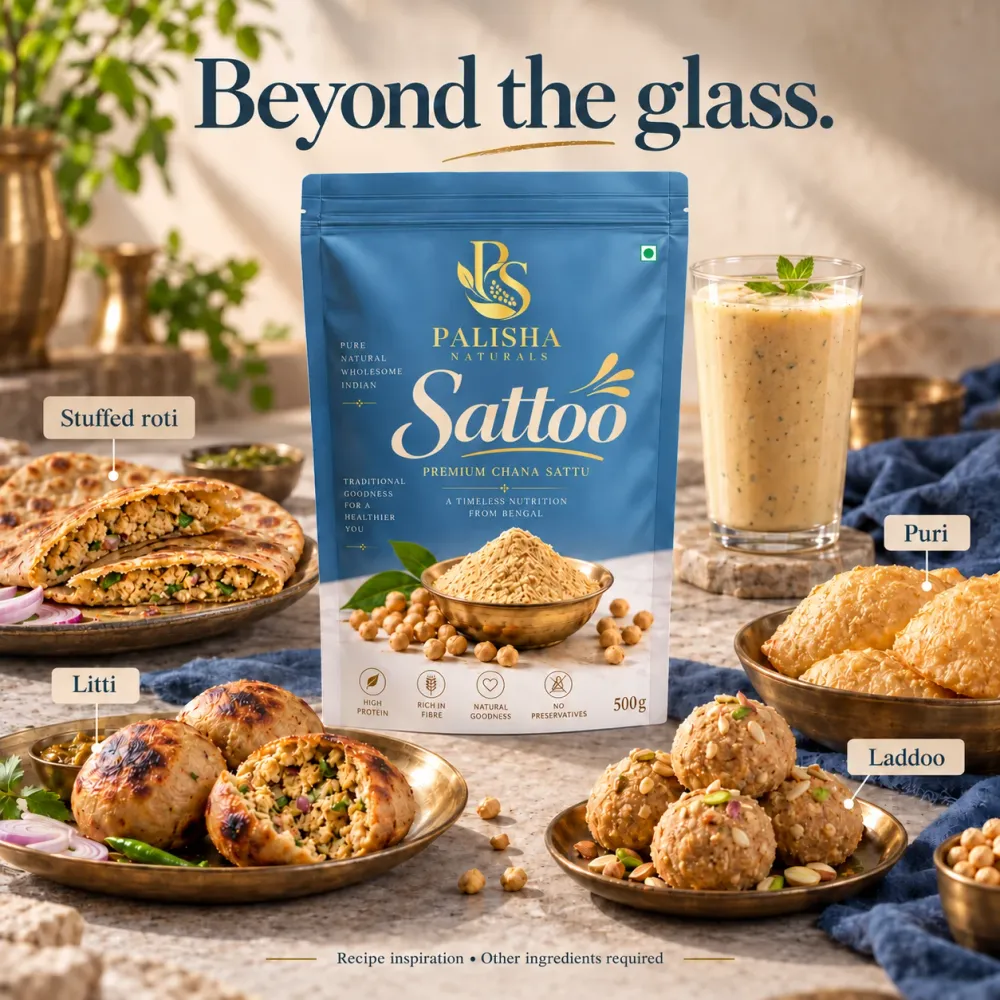
- Use it across meals: drinks, sattu paratha and litti, chillas and laddoos.
You can find our Chana Sattoo in 250 g and 500 g packs, packed in Bengaluru and shipped across India.
Frequently asked questions
How much protein is in 100 g of sattu?
Our Chana Sattoo label shows approximately 24.11 g of protein per 100 g. Values vary slightly between batches because chana is a natural crop.
How much protein is in one glass of sattu drink?
A glass made with 2 to 3 tablespoons (about 20 to 30 g) of chana sattu gives roughly 5 to 7 g of protein, plus whatever milk adds if you use it.
How many calories are in sattu?
About 391 kcal per 100 g according to our label, so a glass made with 25 g of sattu and water is roughly 100 kcal before sweetener.
Is chana sattu gluten free?
Pure chana sattu is naturally gluten free because Bengal gram contains no gluten. Mixed sattu with barley or wheat is not, so check the ingredient list.